Collagen 101: Types, Peptides and How to Actually Make It a Habit
What collagen is, what "peptides" and "hydrolyzed" really mean, marine vs bovine vs vegan, why vitamin C matters, and how to turn collagen into a routine you will keep.

Collagen is the most talked-about beauty ingredient of the decade, and also one of the most confusing. Peptides, hydrolyzed, marine, bovine, type I, type III, "vegan collagen". The labels are doing a lot of work. Here is the plain-English version: what collagen is, what the words on the label mean, and how to make it a habit rather than a tub you forget about.
What collagen actually is
Collagen is the most abundant protein in the body. It is the structural scaffolding in skin, hair, nails, joints, bones and connective tissue: the thing that gives skin its firmness and bounce. Your body makes its own collagen, and production naturally slows as we age, which is one reason skin gradually loses elasticity over time. Sun exposure, smoking and a high-sugar diet speed that process up.
Types I, II and III (and why it mostly doesn't matter)
There are many types of collagen, but three do most of the work:
- Type I: the majority of the collagen in skin, hair, nails, bones and tendons. This is the type most beauty products focus on.
- Type II: found mainly in cartilage; the type joint-focused products usually use.
- Type III: found alongside type I in skin, blood vessels and organs.
Here is the part the marketing skips: when you eat collagen, your body breaks it down into amino acids and small peptides before it does anything with it. Your body does not deliver "type I" to your face. What matters more than the type on the label is the source, the form (peptides) and, above all, whether you take it consistently.
"Peptides" and "hydrolyzed": what the words mean
Whole collagen is a large, tightly wound protein that is hard to absorb. Hydrolyzed collagen, also called collagen peptides, has been broken into short chains of amino acids that dissolve easily and are far easier for the body to take up. When a label says peptides, that is what it means, and it is the form used in most of the research on skin hydration and elasticity.
Research on collagen peptides has commonly used daily amounts in the range of a few grams, taken consistently for around two to three months. The exact numbers vary by study and by person, but the pattern is always the same: small, daily, for weeks, not a big dose once in a while.
Marine vs bovine vs "vegan collagen"
- Marine collagen comes from fish and is mostly type I, the type concentrated in skin. It is the choice for people who avoid beef, and it is what we use in It Girl Snack.
- Bovine collagen comes from cows and provides types I and III. It is the most common source in powders.
- "Vegan collagen" is not collagen at all. Plants do not make it. Vegan products instead provide the nutrients your body uses to build its own collagen (vitamin C, zinc, copper, amino acids and plant extracts) which is a perfectly legitimate approach, as long as the label is honest about it.
Why vitamin C is non-negotiable
Your body cannot synthesize collagen without vitamin C. It is a required cofactor in the enzymes that stabilize the collagen structure. That is why well-designed collagen products pair peptides with vitamin C rather than selling them separately, and why a diet low in vitamin C works against every collagen supplement on the market.
Hyaluronic acid is the other classic partner: it does not build collagen, but it helps skin hold on to water, which is the plump, hydrated look most people are actually after.
How to actually make it a habit
Every collagen study has one thing in common: the participants took it every day for weeks. That is the hard part, and it is where most tubs of powder quietly fail. A few things that help:
- Pick a format you enjoy. If you love a morning smoothie, a powder is easy. If you do not, a gummy, a daily pack or a lollipop you actually look forward to will beat the "better" product you never open.
- Attach it to an anchor. With your coffee, after lunch, on the way out the door. The time of day matters far less than having a fixed one.
- Take a photo on day one. Skin changes slowly and you see yourself every day; a photo is the only honest way to compare.
- Protect what you are building. Daily SPF, sleep and less sugar do more for collagen than any supplement can undo. Our It Girl Guide has the full list.
Where It Girl fits
We built three formats around the same idea: collagen you will actually take every day.
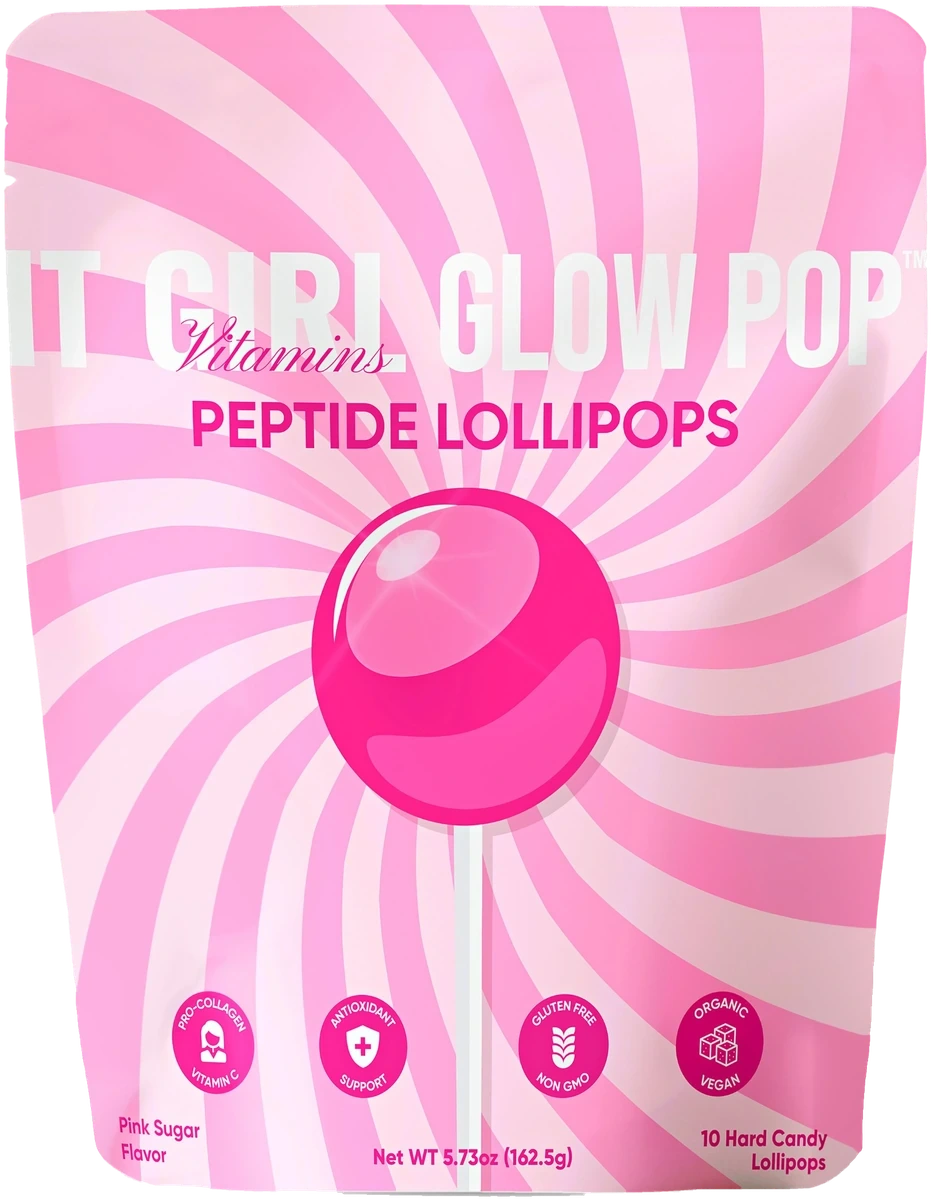
- Peptide Lollipops: collagen peptides, vitamin C and hyaluronic acid in a Pink Sugar pop with one gram of sugar. One a day.
- It Girl Snack: soft heart-shaped gummies with 2,500 mg of marine collagen, hyaluronic acid, biotin and 50+ beauty superfoods, portioned into daily packs.
- It Girl Skin: a beauty gummy built around 10.5 g of peptides and a 5.3 g multi-collagen complex, with ceramides, hyaluronic acid and antioxidants. Two a day.
Want the deeper dive on collagen types? Read What is collagen, and how many types are there?
Good questions
When should I take collagen?
Whenever you will remember. There is no strong evidence that morning beats night; there is very strong evidence that daily beats occasional.
Can I take more than one collagen product?
Yes. The It Girl formulas are designed to sit alongside each other. If you are combining several supplements, check the totals so you know what you are taking, and ask your doctor if you have any health conditions.
How long before I see a difference?
Most research runs for around two to three months of daily use. Give it at least that long, and judge by photos rather than by the mirror.
This article is for general education and is not medical advice. Supplements are not a substitute for a varied diet, and results vary from person to person. Talk to your doctor before starting any supplement if you are pregnant or breastfeeding, under 18, taking medication or managing a health condition. These statements have not been evaluated by the Food and Drug Administration. These products are not intended to diagnose, treat, cure or prevent any disease.