Electrolyte Lollipops: Hydration Without the Powder
What electrolytes do, when you actually need them, why sodium isn't the villain here, and what beauty hydration ingredients are doing in the mix.
Electrolyte powders solved a real problem and created a smaller one. A sachet works beautifully at a kitchen counter with a bottle and a sink nearby. It works less well in seat 24B, on a hike, in traffic, or at three in the morning when stirring anything feels like a project.
An electrolyte lollipop is a narrow answer to that narrow problem. Whether it is a good answer depends on what electrolytes do, and on how often you genuinely need them.
- Electrolytes are minerals that carry an electrical charge in water. Nerves and muscles run on the gradients they create.
- Most people on an ordinary day are fine on food and water. Electrolytes matter around heat, heavy sweat, long efforts, travel and illness.
- Sodium is what you lose most in sweat, and here it is the point rather than the problem.
- A pop carries minerals but not fluid, which is why ours says one a day with a glass of water.
- Anyone on a sodium-restricted diet or managing kidney concerns should talk to a doctor first.
What an electrolyte actually is
An electrolyte is a mineral that separates into charged particles when it dissolves. Those charges move across cell membranes, and that movement is how a nerve fires, how a muscle contracts, and how your body decides which side of a membrane water sits on.
Your body holds them in narrow ranges and spends real effort defending them, mostly through the kidneys. Food supplies them, and ordinarily that is enough. Sweat is the main uncontrolled exit, which is why the subject only gets interesting when you lose a lot of it.
The six on the label, and what each is doing
| Mineral | What your body uses it for |
|---|---|
| Sodium | The main electrolyte outside cells. Governs fluid balance, helps water get absorbed in the gut, and is the one you lose most in sweat. |
| Potassium | The main one inside cells, working against sodium across the membrane. Involved in nerve signaling and muscle contraction. |
| Chloride | Sodium's partner and the other half of salt. Involved in fluid balance and stomach acid. |
| Magnesium | A cofactor in a great many enzyme reactions, including ones behind muscle and nerve function. |
| Calcium | Best known for bone, and central to the signaling that triggers muscle contraction. |
| Phosphorus | Pairs with calcium structurally, and is part of cell membranes and of ATP, the molecule cells use to carry energy. |
The Electrolyte Hydration Pop carries all six, plus betaine, taurine and coconut water. Betaine and taurine are osmolytes, compounds cells use to manage their internal water balance; coconut water brings potassium as it does in the bottle.
Why water alone is not always the answer
Sweat is not just water. Sodium and chloride leave with it, along with smaller amounts of potassium and magnesium. Replace only the volume and you have diluted what remains. That is why sports drinks and oral rehydration solutions contain sodium rather than being flavored water, and why endurance advice says to drink to thirst rather than as much as possible.
Now the caveat this category tends to leave out. On an ordinary day, at an ordinary temperature, eating ordinary food, you are almost certainly fine. Salt is not scarce in a normal diet, and anyone selling daily necessity to a sedentary person is overreaching. Where it earns its place is narrower: heat, heavy or prolonged sweating, long flights and illness. The wider relationship between minerals, water and skin is in our explainer on electrolytes and hydration.
Sodium is not the villain in this particular story
The public health conversation about sodium concerns total daily intake, mostly from processed food, in people who are not sweating it out. That advice is sound, and it is about a different situation.
In heat, heavy sweat or illness, sodium is the point. It is lost in the largest quantity, and it is what helps water move from your gut into your body rather than straight through. A hydration product without sodium is mostly flavoring. None of which is permission to salt everything: if you have been told to watch your sodium, this is a category to discuss with your doctor rather than experiment with.
Hyaluronic acid: oral versus topical, honestly compared
Powder versus a pop, with the trade stated plainly
Powder wins on what powder always wins on: cost, gram-level control, and the fact that you drink 500 ml of liquid to take it, which is half the benefit. A pop delivers no fluid at all. That is the honest limit of the format, and why the label says to take one with a glass of water.
A pop wins the moment of use. No bottle, no scoop, no sink, no sticky shaker in a bag afterward. It goes through airport security without a conversation and works one-handed in a car. And when you are queasy, something you hold in your mouth is easier than something you have to finish. The case for candy as a format is behavioral rather than biological, set out in how to tell real functional candy from the marketing.
What the beauty ingredients are doing in a hydration product
Hyaluronic acid, ceramides and vitamin C look out of place beside a list of minerals until you notice that hydration is doing two jobs in one sentence.
The minerals govern body water: how much you hold and where it sits. Skin hydration is decided in the outer layer by how much water is held there and how fast it escapes. Hyaluronic acid is a humectant, a molecule that binds water. Ceramides are lipids in the barrier that slows water loss. Vitamin C is a cofactor your body uses in its own collagen synthesis, and an antioxidant.
Swallowed, though, these are digested and distributed as your body sees fit rather than delivered to your face. Whether that shows up visibly is still being researched, and modest and slow is the sensible expectation, which we take apart in what actually hydrates skin from the inside.
Who should be careful, and how to use one
- Sodium-restricted diets, blood pressure medication, kidney concerns. Talk to your doctor first. This is the one to act on.
- Anyone already taking mineral supplements. Magnesium stacks across products without anyone noticing.
- Teeth. A pop dissolves slowly, which means contact time. Rinse with water afterward, and ask your dentist if you have dental work.
- Children. Hard candy on a stick is a choking risk, and these are made for adults.
- If you are pregnant, nursing, taking medication or managing a health condition, check with your doctor before adding a supplement.
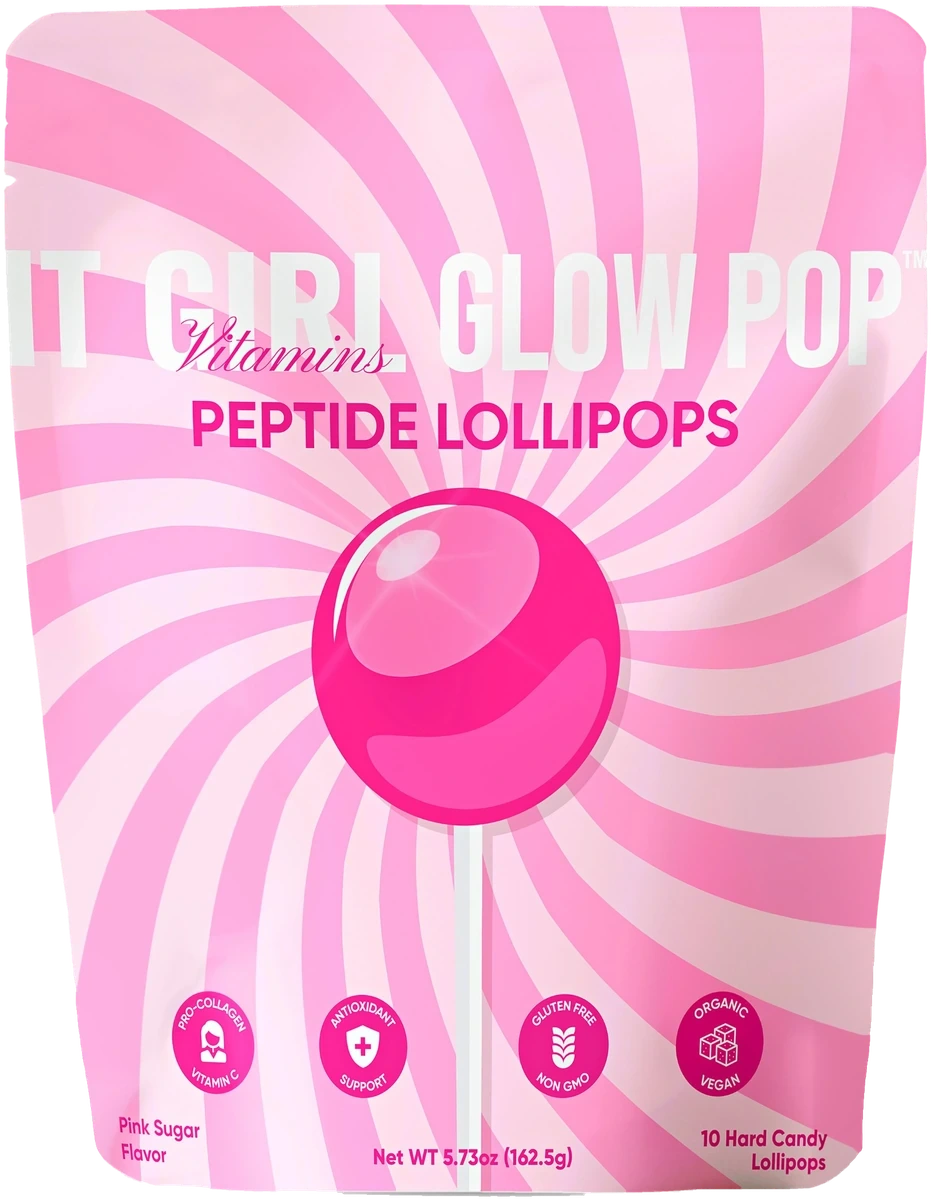
Otherwise: one pop a day with a glass of water, dissolved rather than crunched. The useful moments are the obvious ones. Heat. A long flight or drive. A workout that left a salt ring on your shirt. A day you are ill and trying to keep fluids going. Same logic as our Peptide Beauty Pop, set out in why a collagen lollipop exists at all: the best version of a habit is the one that survives a bad day.
Questions people actually ask
Do electrolyte lollipops actually hydrate you?
They supply electrolytes, not fluid, so they are half of hydration rather than all of it. The minerals help your body take up and hold the water you drink, which is why our label says one pop with a glass of water. Take one and drink nothing, and you have not hydrated.
Do I need electrolytes every day?
Most people eating normally get what they need from food and water. Electrolytes matter most around heat, heavy or prolonged sweating, long travel and illness. Daily use is a preference rather than a requirement.
Is the sodium in an electrolyte product bad for you?
The general advice to limit sodium is about total daily intake, largely from processed food, in people not losing much through sweat. Around heavy sweating, sodium is lost in the greatest quantity and is what helps water get absorbed. If you have been advised to restrict sodium, or have kidney concerns, speak to your doctor first.
Electrolyte lollipop or electrolyte powder?
Powder gives more control over the dose, costs less, and arrives with the water you mixed it into. A pop carries the minerals without a bottle, scoop or sink, which makes it easier on a plane or when you are unwell. They solve different halves of the same problem.
Why is there hyaluronic acid in an electrolyte pop?
Because hydration means two things: the water your body holds, governed by minerals, and the water your skin holds, which depends on humectants and the barrier. Hyaluronic acid binds water and ceramides are part of that barrier, so both turn up in hydration products. How much the oral versions change skin is still being researched, so modest expectations are right.
If the electrolyte routine you own stays in the cupboard because it needs a bottle, the Electrolyte Hydration Pop is the version that fits in a pocket.
This article is for general information and is not medical advice. These statements have not been evaluated by the Food and Drug Administration. This product is not intended to diagnose, treat, cure or prevent any disease.