Functional Candy: What It Is, and How to Tell the Real Thing From the Marketing
What functional candy means, the trade-off at the heart of it, how to judge one on five lines of the label, and when it is simply the wrong format.
"Functional candy" is the polite name for a trade that sounds too good to be true: something that tastes like a sweet and carries something useful. Caffeine mints, electrolyte chews, melatonin gummies, fiber gummies, collagen lollipops. The category has grown fast enough to have its own shelf, and its own share of nonsense.
Some of it is carefully made. Some is an ordinary confection with 20 mg of an extract and a green leaf on the wrapper. The difference is visible on the label if you know which lines to read, including the places where our own products give something up.
- Functional candy is a delivery format, not an ingredient category. The argument for it is adherence, not potency.
- A candy has fixed room. Sugar, sweetener, actives and flavor all compete for it, so something always gives.
- Judge one on five lines: the active, the dose, the sugar per serving, the sweetener, and the coloring.
- No sweetener is free. Sugar costs sugar grams, sugar alcohols cost tolerance, high-intensity sweeteners cost flavor.
- Where the dose is measured in grams, candy is the wrong format and you should buy powder.
What "functional candy" actually means
It is not a regulated term. Nothing stops a brand printing it on ordinary gummy bears with elderberry in the flavor line.
The useful test is subtraction. Take the active out: is there still a product? If the active occupies real mass, changes how the batch is made and requires its own dose statement, you have functional candy. If it could be removed without anyone noticing, you have candy.
These products also split into two legal categories, and the panel tells you which. A dietary supplement carries Supplement Facts, where actives are declared by amount per serving. A conventional food carries Nutrition Facts, where they are not. Supplement Facts is the more informative, reason enough to prefer products carrying one.
Why the category exists at all
Because the best formula is the one someone finishes, and most people do not finish supplements. The pattern is familiar to everyone in this industry: enthusiastic for a fortnight, then a jar at the back of a cupboard. Nothing was wrong with the powder; something was wrong with the ritual.
Format decides that, which we argue in the case for picking a format you will actually finish. Candy has an unfair advantage: nobody needs reminding to eat a sweet. Two duller reasons help too. Hard candy contains almost no water, which makes it shelf-stable without refrigeration, and it is difficult to manufacture well, which slows the copies down.
The argument for candy is behavioral, not biological. A lollipop is not absorbed better because it is a lollipop. Anyone claiming otherwise should be asked to show their work.
The tension at the center of every one of these
A lollipop weighs what it weighs, and everything competes for that mass: sugar or bulk sweetener, the active, flavor, color, fat for mouthfeel. Push the actives up and the sugar comes down, but sugar is doing structural work in hard candy, so something must replace it. Push sugar to zero and you are into sugar alcohols or high-intensity sweeteners, each of which charges you elsewhere. No configuration exists in which nothing gives.
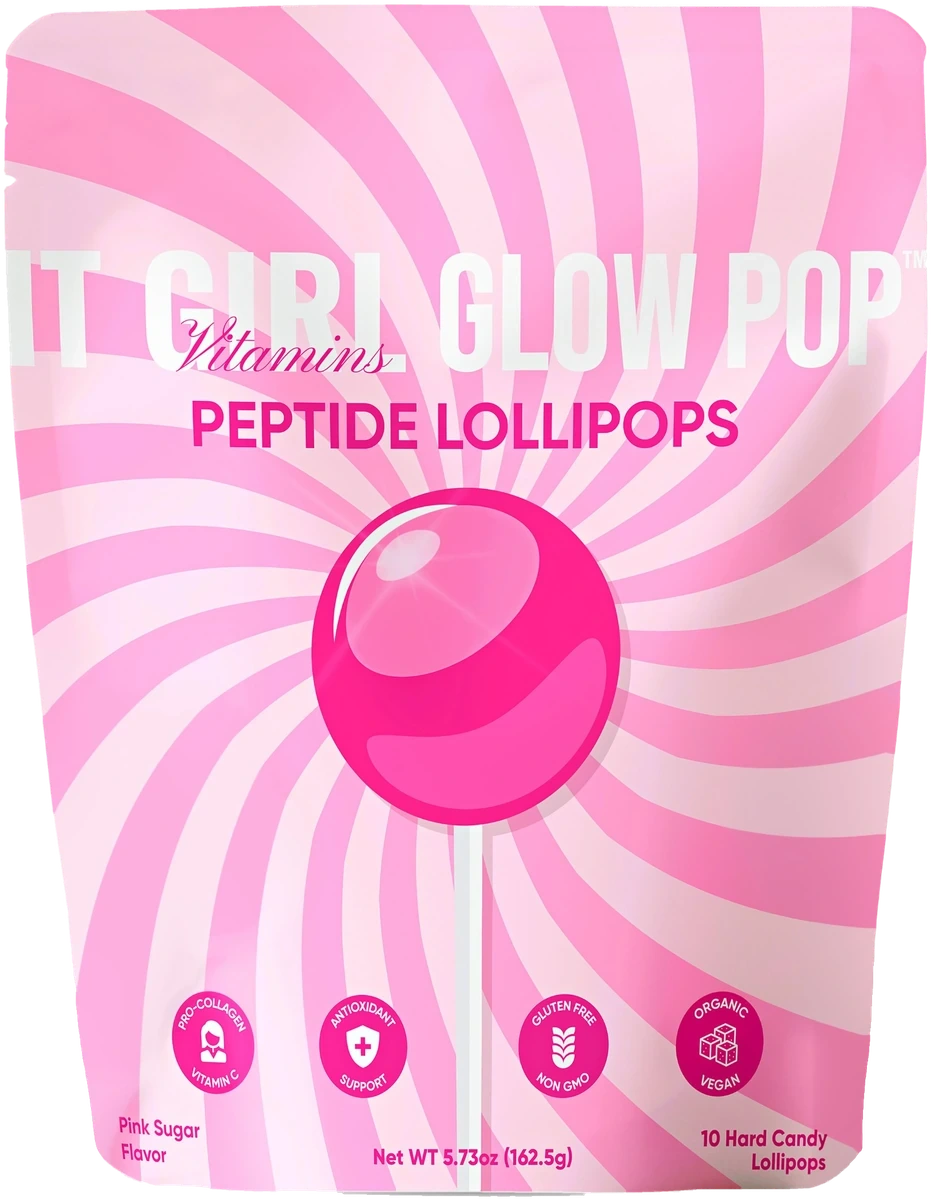
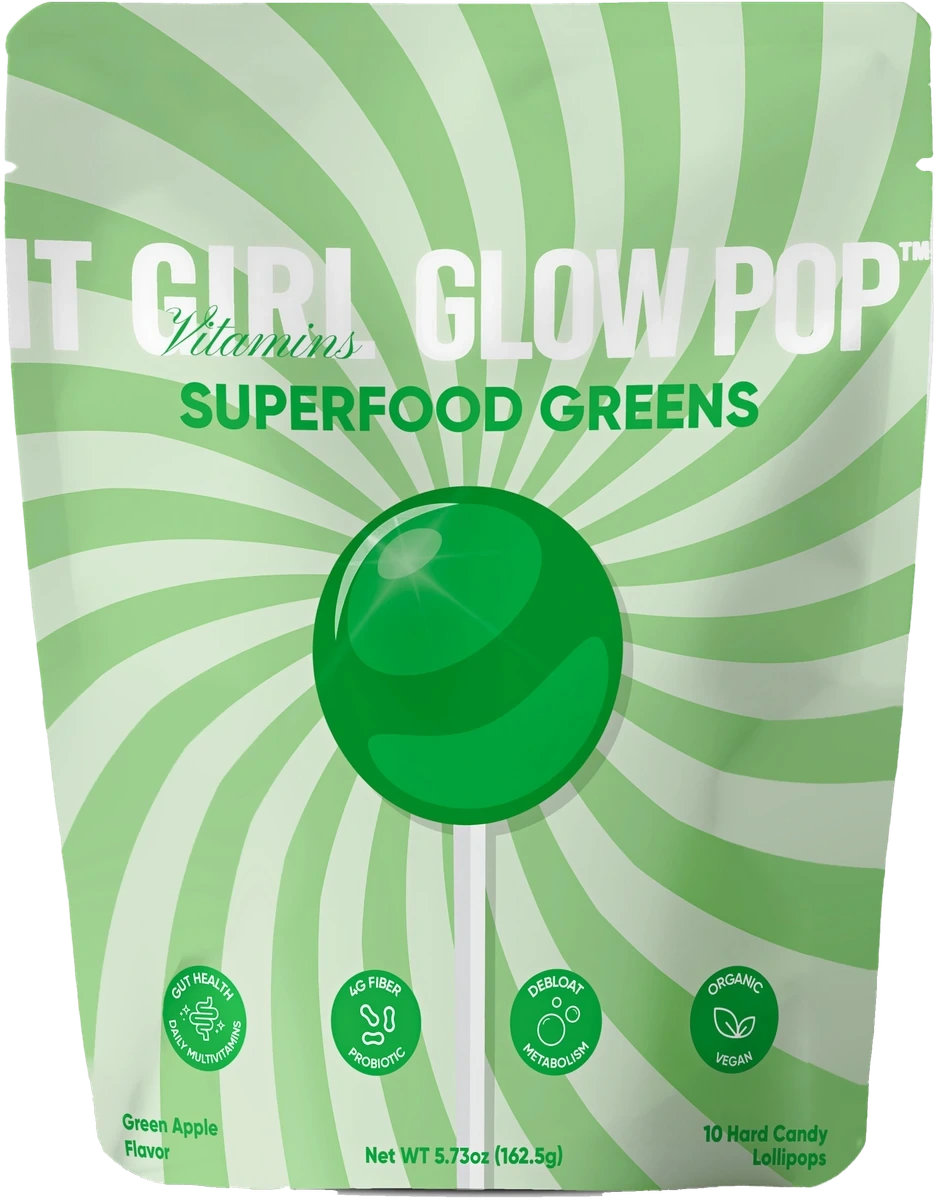
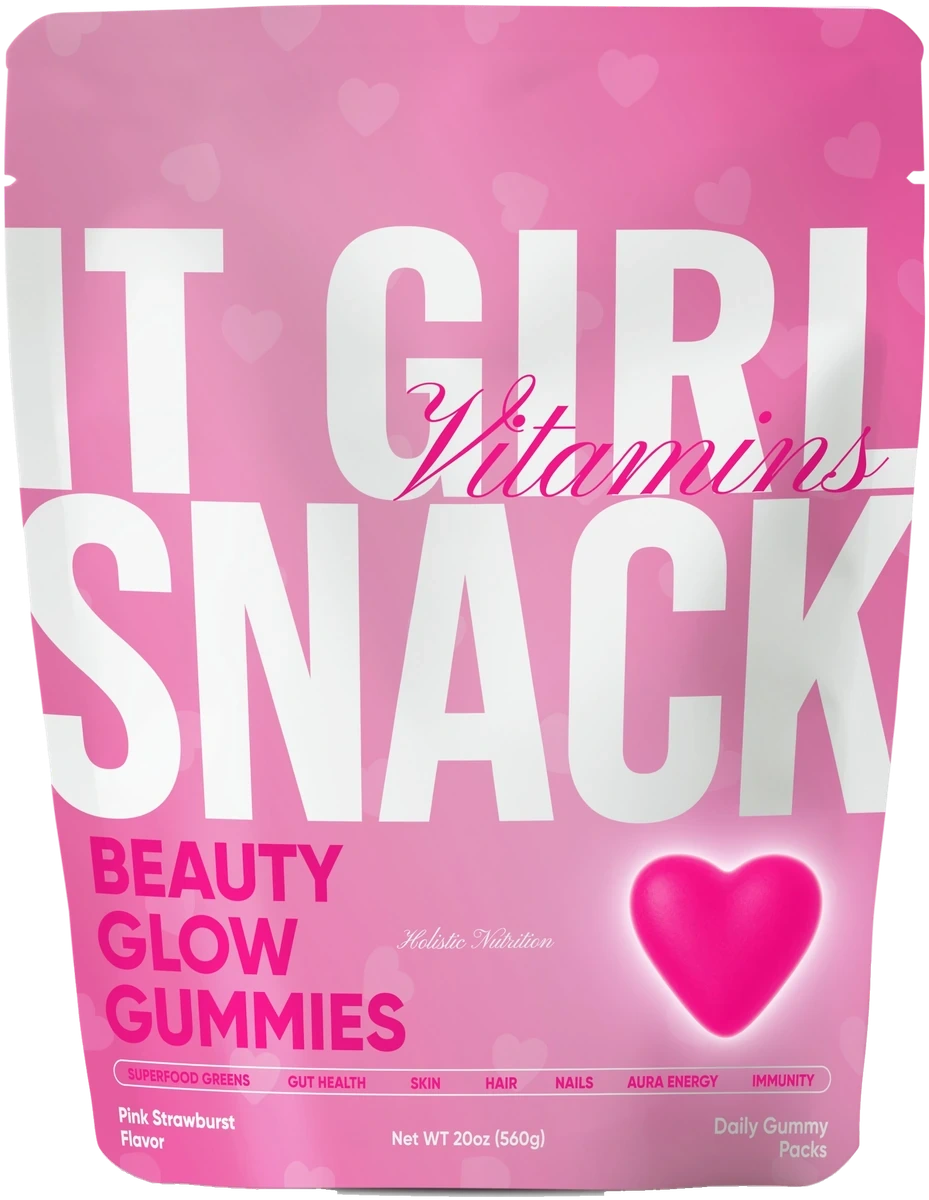
What varies is which trade a brand made and whether it will tell you. Three of ours, as three answers: the Peptide Beauty Pop carries 7,000 mg of collagen peptides and 1 g of sugar, because the peptides are most of the mass and the sugar is nearer a seasoning than a base. It Girl Snack spreads a daily dose across seven gummies at 0.5 g of sugar and 15 calories. The Superfood Greens Pop uses allulose and monk fruit with a little organic cane sugar, because greens need more help tasting like something than strawberry does.
Five lines that separate the real thing from the marketing
- Is the dose meaningful? Ten milligrams of something normally sold in grams is a garnish.
- Is it disclosed by amount? "Beauty blend, 300 mg" across twelve ingredients tells you nothing.
- What is the sugar per serving, and what is a serving? The oldest trick in confectionery is a small declared serving. Multiply it out to a day.
- What is doing the sweetening? Where most of the unpleasant surprises live, digestive and otherwise.
- What is doing the coloring? A fair proxy for what a brand spends on things you cannot taste.
Dose settles almost every supplement argument, whatever the format, as we set out in whether beauty supplements actually work.
Sweeteners, compared without the sales pitch
| Sweetener | What it is | What it does in candy | The catch |
|---|---|---|---|
| Cane sugar | Sucrose | Everything: structure, mouthfeel, shelf life, flavor | It is sugar and it counts as sugar |
| Allulose | A rare sugar, found in figs and maple syrup | Browns and bulks like sugar, minimal calories | Expensive, less sweet, upsets some stomachs in quantity |
| Monk fruit | Luo han guo extract; mogrosides | Intensely sweet in tiny amounts, no bulk | Needs a bulking partner; a lingering sweetness some dislike |
| Stevia | Steviol glycosides from the leaf | Same role as monk fruit | A licorice-adjacent bitterness for some palates |
| Erythritol | Sugar alcohol | Bulks like sugar, near-zero calories | Cooling sensation; tolerance varies |
| Maltitol, sorbitol, xylitol | Sugar alcohols | The closest cheap stand-ins for sugar | Poorly absorbed, fermented in the gut; the usual complaint |
| Sucralose, aspartame, ace-K | High-intensity sweeteners | No calories, no bulk, very stable | Aftertaste, and many people prefer to avoid them |
The sugar alcohols are why "sugar-free candy" carries a reputation. They are sweet and poorly absorbed by design, which makes the calorie math work and sends the unabsorbed portion into the colon to ferment. Maltitol takes most of the blame, partly because it behaves so well in manufacturing that it is used the most. Tolerance is individual and dose-dependent: a piece or two is fine; half a bag is a different afternoon. That trade is the subject of what low-sugar candy swaps in instead of sugar.
Collagen lollipops, explained: why a candy format at all
Coloring: the line nobody reads
Synthetic dyes, the certified colors declared by name as Red 40, Yellow 5, Blue 1, are cheap, brilliantly stable and identical batch to batch. They survive heat, light and time without shifting shade, which is why most candy uses them.
Fruit and vegetable sources, meaning black carrot juice, purple sweet potato, beet, turmeric, annatto, cost more, fade faster and give duller, more variable color. Our pops use organic black carrot juice, with organic strawberry in the peptide pop, which is why the pink is muted rather than fluorescent and why one pouch may not match the last.
The heuristic: if a candy is neon and the label is quiet about where the color came from, you can guess. Neither choice is a moral position, only a cost and stability decision, and a fair proxy for the decisions made where you cannot see them.
When functional candy is the wrong answer
- When the dose is measured in grams. Protein, creatine, fiber. No candy carries 20 g of anything. Buy powder.
- When precision matters. If a dose has to be exact, a confection is not the delivery system.
- When you are avoiding sugar completely. Low is not none, and "none" usually means sugar alcohols.
- Teeth. Anything that dissolves slowly has contact time with enamel. Rinse with water, and ask your dentist if you have dental work.
- Children. Hard candy on a stick is a choking risk, and candy-shaped supplements are easily mistaken for sweets.
- Cost per gram. Candy loses that comparison to powder every time.
If you are pregnant, nursing, taking medication or managing a health condition, check with your doctor before adding any supplement.
Where the category goes next
Three things look likely. Disclosure improves, because brands that can print a number keep pointing out that their competitors cannot. Sweetener systems converge on allulose paired with monk fruit or stevia, the combination closest to sugar without sugar alcohols, as the price of allulose falls. And packaging shifts toward single-serve packs, because portion control built into the wrapper is the one feature a resealable bag can never offer. The less comfortable prediction: regulators will take more interest in supplements shaped like sweets, particularly around children, and the category will be better for it.
Questions people actually ask
What is functional candy?
Functional candy is confectionery formulated around an active ingredient, such as collagen peptides, electrolytes, caffeine or vitamins, rather than candy with a health-adjacent word on the wrapper. The term is not regulated, so the label does the work. A useful test: would removing the active leave a meaningfully different product?
Is functional candy actually healthy?
It is candy with something useful in it, a more modest claim than most packaging makes. The honest case is adherence: a format people finish delivers more over a year than a better formula abandoned in week two. Judge each product on dose, sugar and sweetener, not on the category.
Does putting an active in candy reduce how well it works?
It depends on the ingredient and the process. Hydrolyzed peptides and minerals are relatively robust, and heat-sensitive ingredients are often added late as a batch cools for this reason. What matters more is the dose on the panel, since a well-handled small dose is still a small dose.
Why do most functional candies use sugar alcohols?
Because sugar does structural work in confectionery, and sugar alcohols are the cheapest ingredients that behave similarly while letting a label read sugar-free. The trade is that they are poorly absorbed, and the unabsorbed portion ferments in the gut, which is why some people find them uncomfortable. Allulose avoids much of that and costs more.
How much sugar should a functional candy have?
There is no single right answer, but the number should be small enough not to think twice about daily and printed plainly enough to find. Our Peptide Beauty Pop has 1 g per pop; a daily pack of It Girl Snack has 0.5 g. Check the serving size before comparing two products.
The fairest way to test the idea is to read one label properly, whether that is an electrolyte pop, one of ours, or somebody else's.
This article is for general information and is not medical advice. These statements have not been evaluated by the Food and Drug Administration. This product is not intended to diagnose, treat, cure or prevent any disease.