Do Beauty Supplements Actually Work? An Honest Answer
Where the reasoning behind beauty supplements is strongest, where it's oversold, and how to read a supplement facts panel in 60 seconds before you buy.
The honest answer is: some of them, partly, slowly, for some people, and considerably less than the packaging suggests. That is an unsatisfying sentence, and the most accurate one anybody in this category can give you without making things up.
What follows is the version we would give a friend who asked whether to bother: where the reasoning is good, where it thins out, why dose matters more than brand, and how to tell in a minute whether a label is being straight with you.
- "Works" needs defining. A supplement supplies nutrients; it does not perform a procedure.
- The reasoning is strongest for collagen peptides, vitamin C and hydration ingredients: strongest, not settled.
- Dose decides almost everything, which is why blends that hide amounts deserve suspicion.
- Taking a modest formula daily beats taking an impressive one when you remember.
- Sometimes the honest expectation is nothing, and it is worth knowing when.
What "works" should actually mean before anyone answers
Most arguments about beauty supplements are really arguments about the word. If "works" means visibly different skin in two weeks, nothing in this category works, including ours. If it means supplying the nutrients your body uses to build skin, hair and nails, the idea is sound and boring and largely correct.
The useful frame is a supply chain, not a treatment. You are not editing your face; you are making sure the raw materials are there, then waiting on a construction schedule you do not control. That is the frame our guide to beauty from within sets out, and the one this article assumes.
Where the reasoning is strongest
Three areas hold up better than the rest, though none is a guarantee.
Collagen peptides
This is the best-argued ingredient in the category. Collagen is the main structural protein in skin, peptides are its digestible form, and research into oral collagen has been active for years with results that are encouraging rather than conclusive. The mechanism is plausible on two levels (raw material, and possibly signaling) and honestly, the first is well understood and the second is not. More in our collagen primer.
Vitamin C
The least glamorous entry and the most certain. The enzymes that build stable collagen require vitamin C to work: settled biochemistry, not an emerging finding. What is not established is that more than you need produces proportionally better skin. It is a requirement, not a dial.
Hydration ingredients
Hyaluronic acid, ceramides and electrolytes share a defensible rationale: skin that holds water behaves differently from skin that does not. The oral evidence is younger and thinner than the topical evidence, and the mechanism for ingested hyaluronic acid is still being worked out. We cover it in oral versus topical hyaluronic acid.
Beauty gummies vs capsules vs powders vs lollipops
Where it gets weak, or simply oversold
Biotin is the clearest example. It is genuinely needed for hair and nails, and deficiency is uncommon in people eating a normal diet, so a large dose often adds little to what food already provided. It is on nearly every label anyway, because it is cheap and the word tests well.
The same applies to long superfood lists. Forty-seven botanical extracts in one gummy is a marketing achievement, not a formulation one; there is no room in a gummy for a meaningful amount of forty-seven things. And "supports" is doing enormous quiet work across the whole industry, ours included: a legally careful verb precisely because the certainty is not there. We sort reliable from decorative in our guide to hair, skin and nails supplements.
Dose is the whole game, and blends are where it hides
An ingredient does nothing at a dose too small to matter. That single idea explains most disappointment in this category.
A "Proprietary Blend" may list one total weight for the whole group, in descending order, without saying how much of each is in there. A 500 mg blend could be 490 mg of rice flour and ten ingredients sharing the other 10 mg, and the label would be entirely truthful. Brands call this protecting their formula. Occasionally that is true; more often it protects the ratio from scrutiny.
The test is simple: can you find a number in milligrams next to the ingredient you are buying the product for? If not, you do not know what you are buying.
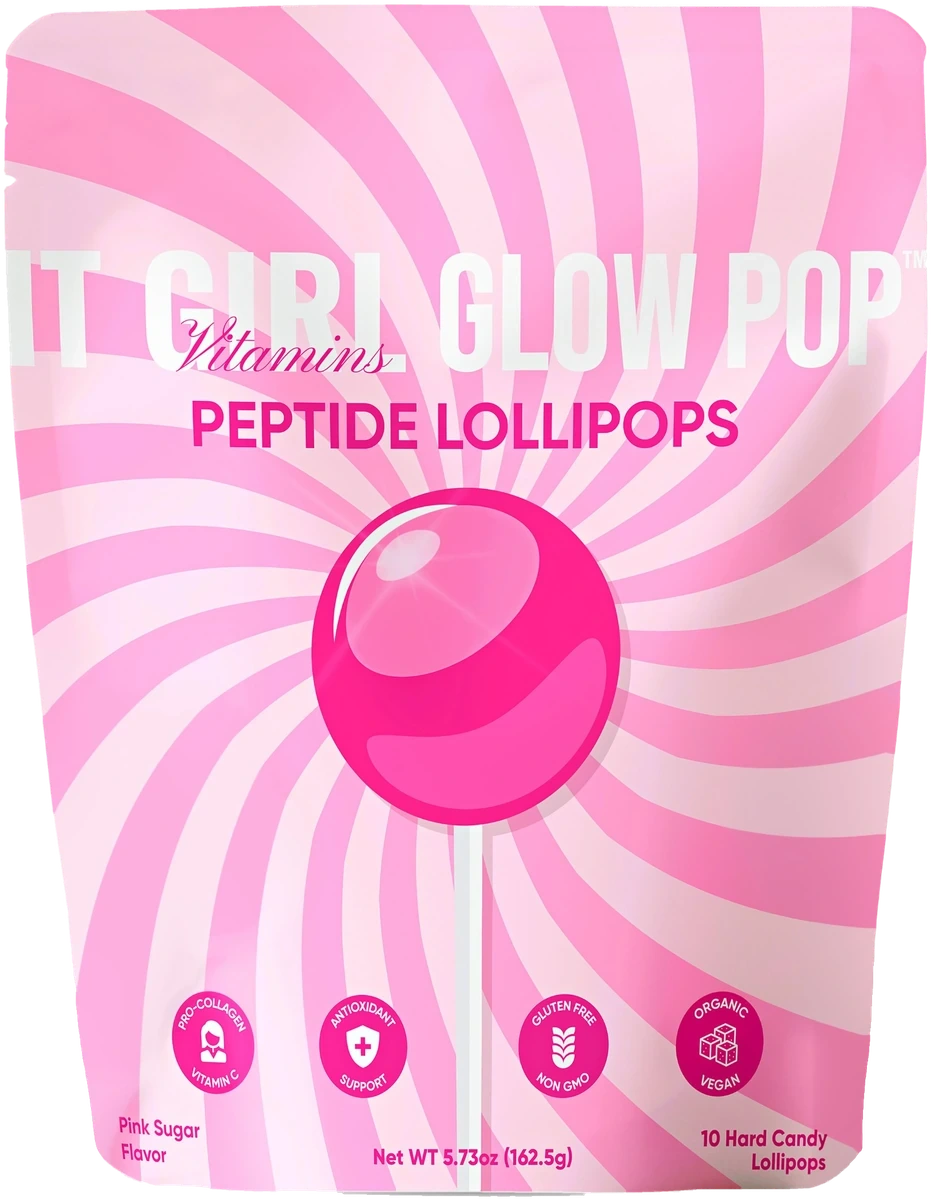
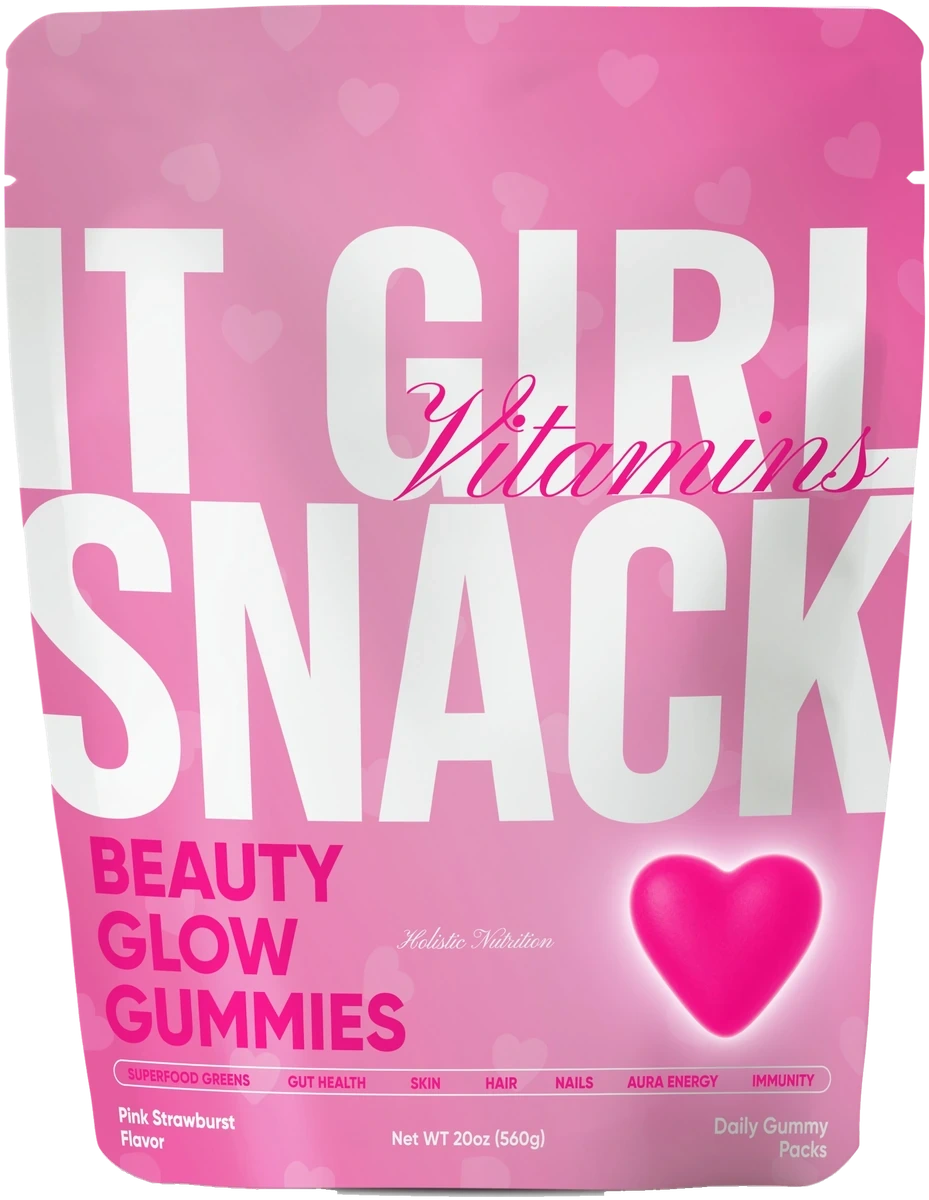
This is why we print amounts rather than blend totals. A Peptide Beauty Pop lists 7,000 mg of collagen peptides, 500 mg of vitamin C and 500 mg of hyaluronic acid; a daily pack of It Girl Snack lists 2,500 mg of marine collagen and 1,000 mg of MSM. You can compare those against anything, which is the point.
Why consistency beats potency, and it is not close
Take a strong formula four days a week and a modest one every day, and the modest one usually wins over three months: your body builds tissue continuously and does not bank a good Tuesday. What matters is average supply across the stretch, not the peak on your best day.
So the right question is not "which has the biggest numbers" but "which will I still be taking in eight weeks", and that answer has more to do with taste and convenience than with the panel. Our piece on how long collagen takes to work covers the timeline.
How to read a supplement facts panel in 60 seconds
- Serving size first. Every number is per serving, and a serving might be four capsules or seven gummies.
- Find your headline ingredient and look for a number. Milligrams, not adjectives. No number means no comparison is possible.
- Scan for "Proprietary Blend". If your ingredient sits inside one, treat the amount as unknown.
- Check the order. Ingredients run heaviest to lightest, so anything near the end of a blend is present in trace amounts.
- Read the other-ingredients line. Sweeteners, fillers and coatings live here, along with the actual sugar content.
- Compare per day, not per piece. A product taken twice daily is not twice as strong; do the arithmetic before judging.
Red flags worth walking away from
- Fairy dusting. An ingredient on the front of the pack, present at a token amount on the back, because the name sells.
- Blends without amounts. Still the most common problem in the category.
- Miracle verbs. Reverses, erases, cures, eliminates. Supplements are food, and food does not do those things.
- Unnamed authority. "Clinically proven" with no study named, or "doctor formulated" with no doctor.
- Transformation timelines. Anything promising visible change in seven or fourteen days is describing lighting, not biology.
When the honest expectation is nothing
Sometimes the right answer is to save your money. If you already eat well, sleep properly and get enough protein, you may simply not be short of the thing being sold. If the issue is sun damage, genetics or a diagnosed condition, that is not a nutritional gap. That is a conversation for a doctor.
And if you take something three days a week, expect three-days-a-week results. If you are pregnant, nursing, taking medication or managing a health condition, check with your doctor before adding a supplement.
Questions people actually ask
Are beauty supplements a scam?
Not inherently, but the category contains both careful products and expensive decoration. The difference is usually visible on the label: real amounts in milligrams, ingredients with a plausible role, and claims written in careful language. Products that rely on hidden blends and dramatic promises are the ones to avoid.
How do I know if a collagen supplement has enough in it?
Look for the amount printed in milligrams or grams per daily serving rather than inside a proprietary blend. Then check whether that serving is one item or several, since some labels reach their headline number across five capsules.
Is it better to get these nutrients from food?
Where you can, yes. Food delivers nutrients alongside fiber, water and other compounds, and it is cheaper. Supplements are most useful as a top-up when something is consistently missing from your week, or when a convenient daily format is the only thing that keeps a habit going.
Why do beauty supplements take so long to show anything?
Because the tissue they support rebuilds slowly. Skin's structural layer turns over across months rather than weeks, and hair has to grow out from the follicle before you can see any change. Three months of consistent use is a fair trial; two weeks is not.
If you would rather compare real amounts than decode a blend, our Peptide Beauty Pop panel prints them in full.
This article is for general information and is not medical advice. These statements have not been evaluated by the Food and Drug Administration. This product is not intended to diagnose, treat, cure or prevent any disease.