Peptides, Explained: Skincare Peptides vs the Collagen Peptides You Eat
The word peptide is on serums, creams, powders and now lollipops. They are not the same thing. Here is what each kind is, how it is meant to work and what the evidence actually says.
Peptide is having a moment. It is on the front of serums, eye creams, lip treatments, collagen powders and, yes, our lollipops. Which raises a fair question: are they all the same thing?
Not quite. They share a definition, but a peptide in a serum and a peptide you eat are designed for different jobs, reach your skin by different routes and are backed by different kinds of evidence. Once you can tell them apart, a lot of beauty marketing gets easier to read.
- A peptide is a short chain of amino acids, the building blocks of proteins, in smaller pieces.
- Skincare peptides are small, specific molecules chosen to send a signal or carry something into the skin's surface layers.
- Collagen peptides are collagen broken into short fragments so you can eat them. Your body digests them into amino acids and small peptides.
- Research on both is promising but still developing. The strongest recent pooled data favours oral peptides for skin hydration.
What a peptide actually is
Proteins are long chains of amino acids folded into shapes. Peptides are shorter chains, often somewhere between two and fifty amino acids. Your body makes thousands of them, and many act as messengers, telling cells when to repair, build or slow down.
That messenger role is what made peptides interesting to skincare chemists, and the building-block role is what made them interesting to nutrition. Same word, two very different ideas.
The peptides in your serum
Cosmetic peptides are usually grouped by what they are designed to do. The names on the ingredient list are long, so here are the families to look for:
| Family | What it is meant to do | Examples you may see |
|---|---|---|
| Signal peptides | Mimic fragments of skin proteins to encourage cells to produce more of the skin's support structure | Palmitoyl pentapeptide-4 (sold as Matrixyl), palmitoyl tripeptide-1 |
| Carrier peptides | Deliver trace minerals involved in skin repair | Copper tripeptide-1 (GHK-Cu, "copper peptides") |
| Neurotransmitter-affecting peptides | Aim to soften the look of expression lines by relaxing muscle signalling at the surface, the source of the "Botox-like" nickname | Acetyl hexapeptide-8 (Argireline) |
| Enzyme-inhibitor peptides | Slow enzymes that break down skin proteins | Peptides from soy or rice |
The catch is getting them where they need to go. Skin is a very good barrier, and dermatologists often cite a rough rule that molecules larger than about 500 daltons struggle to pass through it. Many peptides are bigger than that, which is why formulators attach fatty acids (the "palmitoyl" in the name) to help them penetrate. It also explains why results depend heavily on the formula around the peptide, not just the peptide itself.
On evidence: there are encouraging trials, but many are small, short and funded by the companies that make the ingredients. The "Botox-like" label in particular oversells what a cream can do next to an injection.
The collagen peptides you eat
Collagen peptides, also called hydrolysed collagen or collagen hydrolysate, are collagen that has been cut into short fragments with enzymes so it dissolves and digests easily. They are not trying to send a surface signal. They are a food-grade protein source rich in the amino acids collagen is made of, especially glycine, proline and hydroxyproline.
Once eaten, most of it is digested into amino acids and very small peptides. Researchers have detected small collagen-derived peptides, such as prolyl-hydroxyproline, in the blood after people consume collagen hydrolysate, and are still working out what role those fragments play. What collagen peptides do not do is travel intact to your face and slot into place. Collagen 101 covers the types and the digestion story in more detail.

What the research says right now
A systematic review and meta-analysis published in Frontiers in Medicine in 2026 pooled 19 randomised controlled trials with 1,341 participants, most of them testing oral collagen peptides over 4 to 12 weeks. Its conclusion: peptides, particularly oral formulations, significantly improved skin hydration and brightness, with a modest pooled effect on wrinkles and no significant effect on elasticity. The authors also flagged very high variation between studies and called for larger, standardised trials.
That is a fair summary of the whole field. Peptides, eaten or applied, look safe and show real signals, especially for hydration, but they are not a replacement for sunscreen, retinoids or professional treatments, and the size of the benefit varies a lot from study to study.
A quick reality check on both kinds: results take weeks, not days. Skin renews itself slowly, and every trial above ran for at least a month. If a product promises overnight collagen, the promise is the problem.
How long does collagen take to work? A realistic timeline
Serum or supplement? How to choose
- If you want a targeted surface product, look for a named peptide on the ingredient list, a formula designed for penetration, and a brand that tells you the concentration or at least the peptide family.
- If you want a daily nutrition habit, look for grams of collagen peptides per serving on the panel, and a format you will genuinely take every day for months.
- If you want both, they do not compete. One works on the surface, the other is part of what you eat. Plenty of people pair a peptide serum with a collagen habit.
- Whichever you pick, pair it with vitamin C. The enzymes that build collagen need it, which is why it appears in so many collagen formulas: our vitamin C guide explains the food, supplement and serum options.
Where our peptides fit
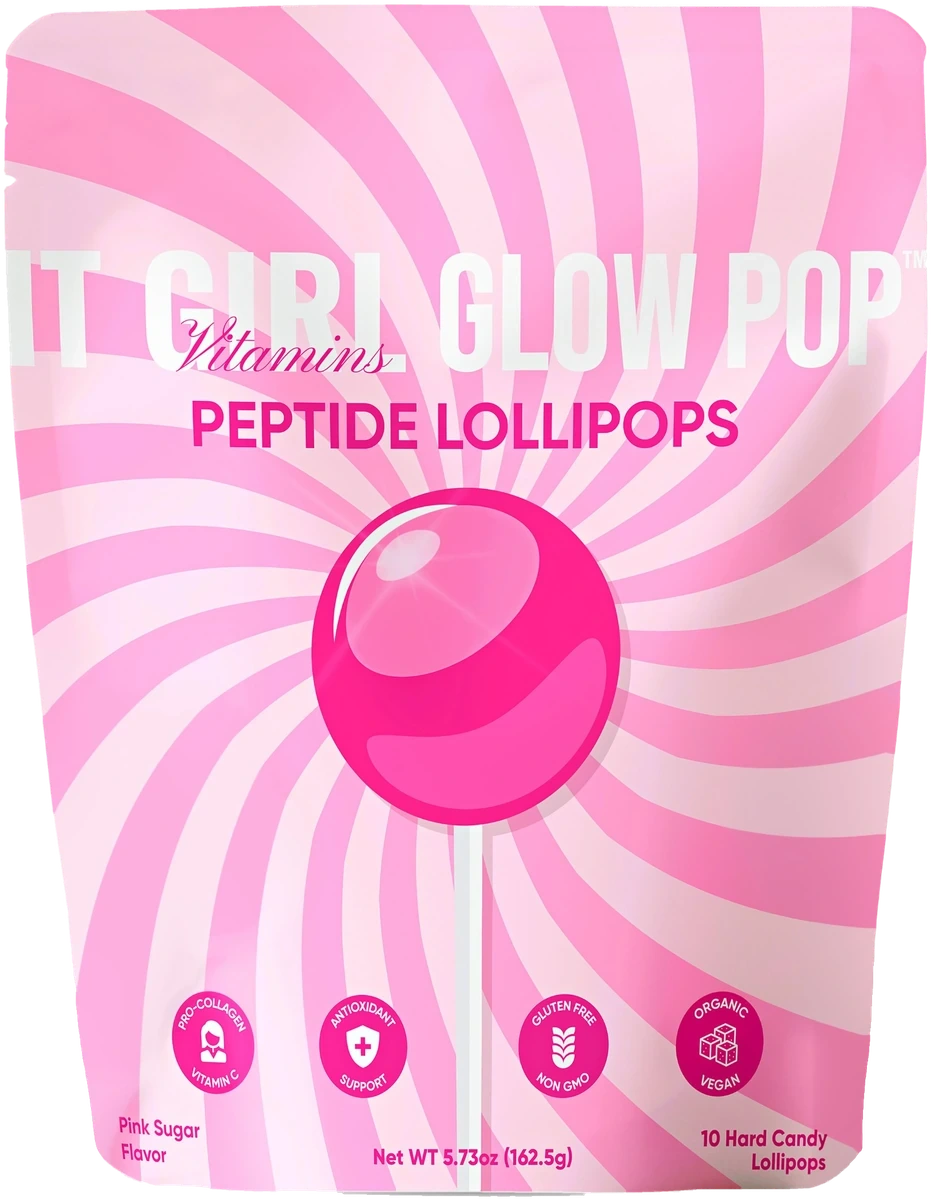
Our Peptide Beauty Pop is the eat-it kind. Each lollipop lists 7,000 mg of collagen peptides alongside 500 mg of vitamin C and 500 mg of hyaluronic acid, in a Pink Sugar flavour designed for the moment you would reach for something sweet anyway. It Girl Snack takes a gummy route with 2,500 mg of hydrolysed marine collagen per daily pack, and It Girl Skin builds a broader daily formula around peptides, ceramides and antioxidants.
None of them are serums, and none of them claim to work like one. They are beauty nutrition in a format that makes consistency easy, which, across every study above, is the part that actually matters. For how the source of collagen changes a label, see marine vs bovine vs vegan collagen.
Questions people actually ask
Are peptides and collagen the same thing?
No. Collagen is a large structural protein. Peptides are short chains of amino acids. Collagen peptides are collagen broken down into short fragments so they can be eaten and digested, while skincare peptides are specific small molecules designed to act on the skin's surface.
Do peptide serums really work like Botox?
No. Some cosmetic peptides, such as acetyl hexapeptide-8, are designed to soften the look of expression lines, which is where the nickname comes from. Their effect in studies is far milder than injectable treatments, and results depend heavily on the formula.
Can collagen peptides you eat reach your skin?
Not as intact collagen. They are digested into amino acids and small peptides, and research has found small collagen-derived peptides in the blood after people consume them. A 2026 meta-analysis found oral peptides improved skin hydration and brightness in trials, though results varied considerably between studies.
Can I use a peptide serum and take collagen at the same time?
Yes. They work in different places, one on the skin's surface, one as part of your diet, so there is no conflict between them. Introduce new skincare one product at a time so you can tell how your skin responds.
This article is for general information and is not medical advice. These statements have not been evaluated by the Food and Drug Administration. This product is not intended to diagnose, treat, cure or prevent any disease. If you are pregnant, nursing, taking medication or managing a health condition, check with your doctor before adding a supplement.