Vitamin C for Skin: Food, Supplements and Serums, Compared
Vitamin C shows up in fruit bowls, gummies and glass dropper bottles. Each route does something slightly different. Here is how they compare, and how much is enough.
Few ingredients have a better reputation in beauty than vitamin C. It is in the fruit bowl, in most beauty supplements and in the little amber bottle on half the bathroom shelves you know.
The reputation is mostly earned, but the three routes are not interchangeable. What you eat, what you take and what you apply each play a slightly different role, and knowing which is which saves money and a fair amount of guesswork.
- Your body needs vitamin C to make collagen. That part is not marketing; it is basic biochemistry.
- Adult women need 75 mg a day and men 90 mg (smokers add 35 mg). The upper limit is 2,000 mg a day from all sources.
- Eating or taking vitamin C raises skin levels until your blood is saturated. Past that point, more does not add more.
- Serums are a separate tool: a well-made topical vitamin C works on the skin's surface, especially alongside sunscreen.
Why skin cares about vitamin C
The NIH Office of Dietary Supplements puts it plainly: vitamin C is required for the biosynthesis of collagen. The enzymes that stabilise newly made collagen fibres cannot do their job without it, which is why a severe, long-term shortage (scurvy) shows up in the gums and skin.
Vitamin C is also one of the skin's main water-soluble antioxidants. The Linus Pauling Institute notes that it is found in high concentrations in skin, where it helps handle the oxidative stress that sunlight and pollution create. Two jobs, building and protecting. Both are reasons it keeps appearing next to collagen on labels. Our guide to peptides explains why that pairing is so common.
Route one: food
For most people, food covers the daily requirement comfortably. Some of the richest everyday sources, per the NIH:
| Food | Serving | Vitamin C |
|---|---|---|
| Red bell pepper, raw | ½ cup | 95 mg |
| Orange juice | ¾ cup | 93 mg |
| Orange | 1 medium | 70 mg |
| Kiwifruit | 1 medium | 64 mg |
| Broccoli, cooked | ½ cup | 51 mg |
| Strawberries, fresh | ½ cup | 49 mg |
| Brussels sprouts, cooked | ½ cup | 48 mg |
Vitamin C is sensitive to heat and long storage, so raw or lightly cooked produce keeps more of it. A kiwi and a handful of strawberries already puts you past the daily requirement. For the rest of the skin-supporting nutrients, our glow grocery list goes nutrient by nutrient.
Route two: supplements
A supplement makes sense when your diet is patchy, when you want a consistent daily amount, or when vitamin C is part of a formula built around collagen. The Linus Pauling Institute reports that oral vitamin C does increase vitamin C levels in the skin, up to a point. Once blood levels are saturated, skin levels stop rising.
Absorption follows the same pattern. The NIH notes that at moderate intakes of 30 to 180 mg a day, the body absorbs roughly 70 to 90 percent; above 1 gram a day, absorption falls to less than half, and the rest is excreted. So a very large single dose is mostly a very expensive glass of water.

Route three: serums
Topical vitamin C is a different tool with a different job: it acts where you apply it. According to the Linus Pauling Institute, pure L-ascorbic acid is the most effective form for the skin but also the least stable in solution. Research found absorption peaked at about a 20% concentration, and formulas with a pH below 4 help it penetrate. More stable derivatives exist, but they tend to get into the skin less easily.
Studies also suggest topical vitamin C and vitamin E together are more effective at helping protect against sun damage than either alone, which is why so many serums pair them. None of this replaces sunscreen; a vitamin C serum is a partner to SPF, not a substitute.
Serum tip: vitamin C oxidises with light and air. If your serum turns noticeably darker yellow or brown, it has degraded. Buy smaller bottles in opaque packaging and keep the cap tight.
Hyaluronic acid: taking it vs putting it on
The three routes, side by side
| Food | Supplement | Serum | |
|---|---|---|---|
| Main role | Covers daily needs plus fibre and other nutrients | A consistent daily amount, often paired with collagen | Targeted surface support alongside sunscreen |
| Reaches skin | Through the bloodstream | Through the bloodstream, until saturation | Directly, if the formula penetrates |
| Watch out for | Heat and storage losses | Doses far above what you absorb | Oxidation, irritation at high strengths |
| Best for | Everyone | Patchy diets, collagen routines | People who want a dedicated skincare step |
How much is enough, and when it adds up
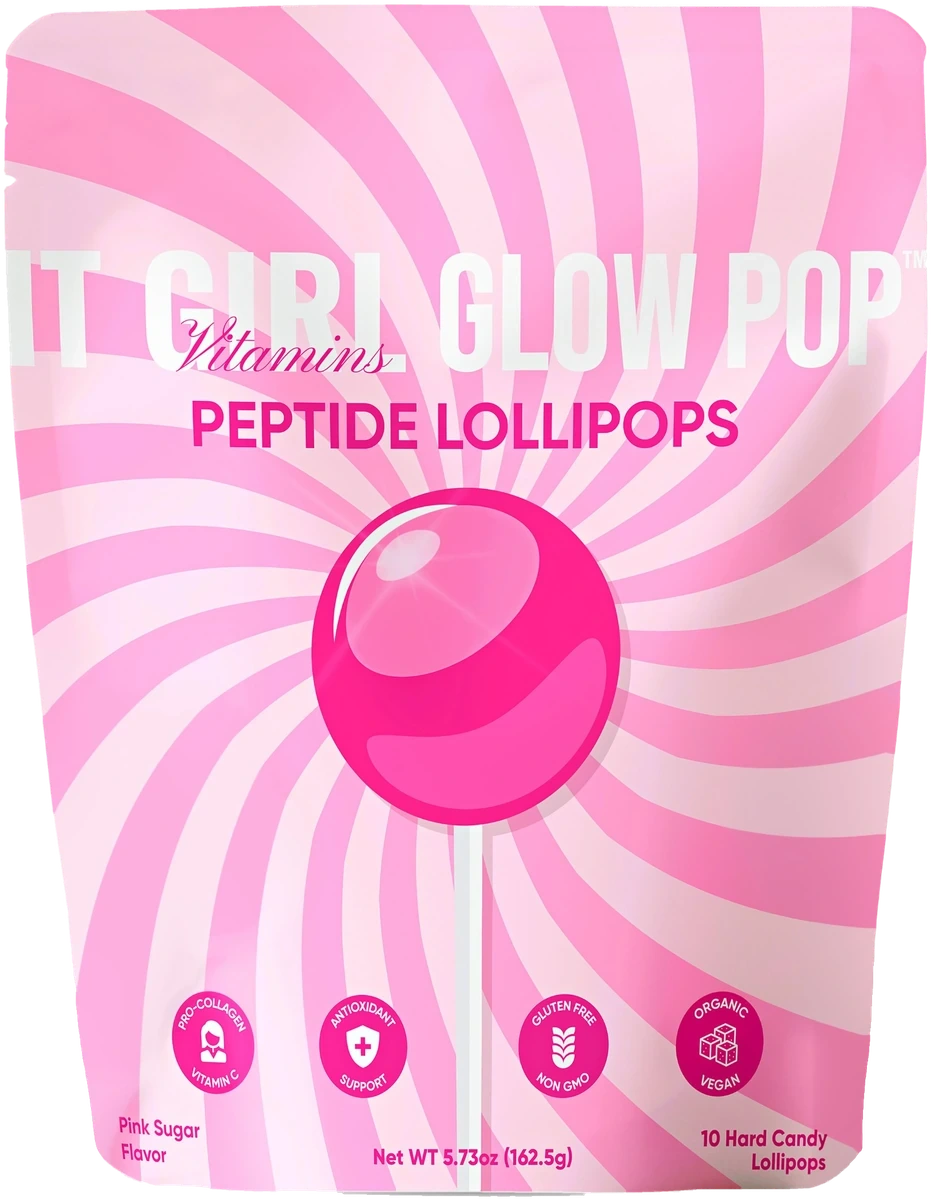
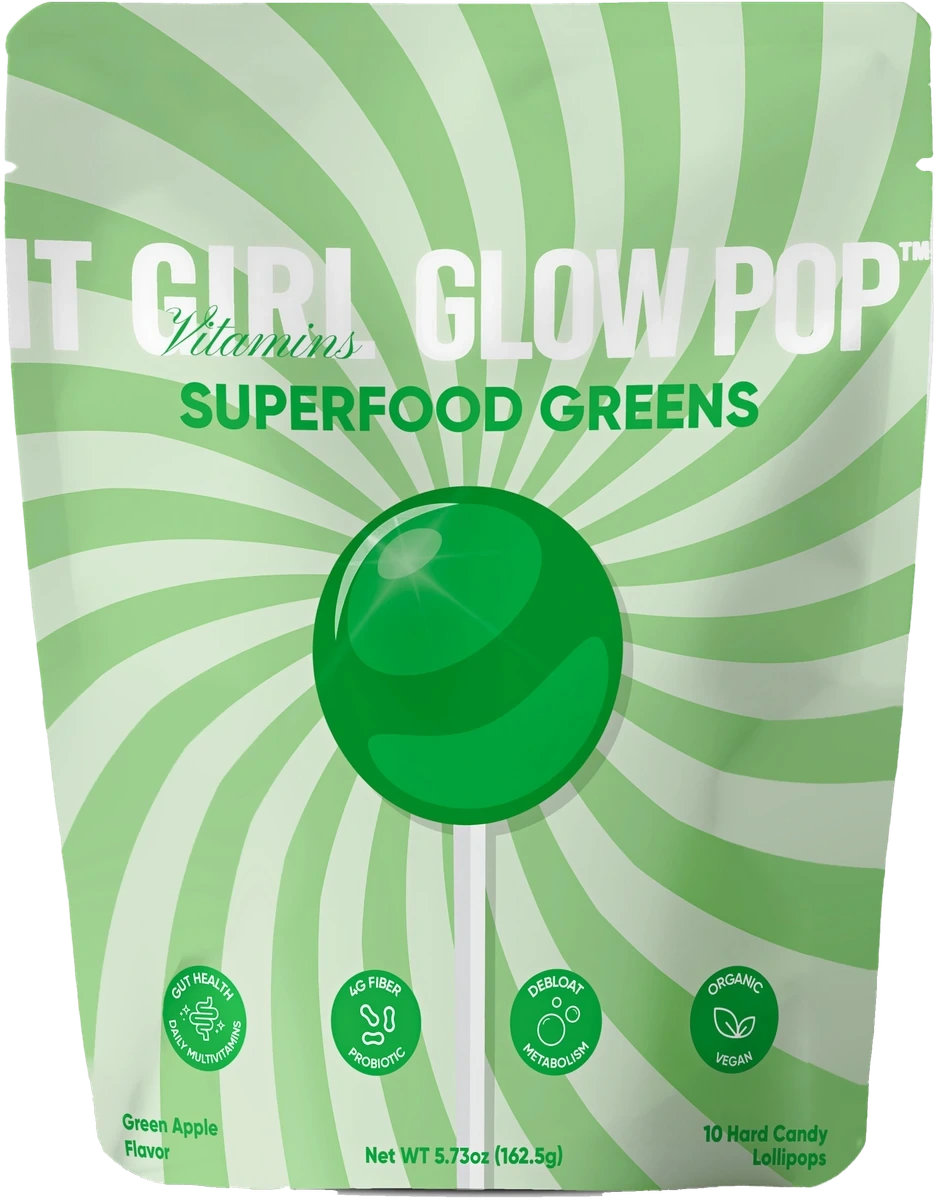
Here is the part most labels will not tell you: vitamin C adds up fast if you take more than one product. Across our own range, one Peptide Beauty Pop lists 500 mg, a daily serving of It Girl Skin or It Girl Snack lists 300 mg each, a Superfood Greens Pop lists 200 mg and an Electrolyte Hydration Pop lists 90 mg.
Even all five together stay below the 2,000 mg upper limit, but because absorption drops above about a gram a day, stacking everything is not the upgrade it looks like. Choose the product whose whole formula fits what you want, and let food do the rest. Our label-reading guide shows how to total things up in a minute.
Where our products fit
If collagen is the goal, the Peptide Beauty Pop puts 500 mg of vitamin C in the same lollipop as 7,000 mg of collagen peptides, the pairing that matters most. It Girl Skin and It Girl Snack include vitamin C inside broader beauty formulas, and the Superfood Greens Pop adds it to your greens. One of them is plenty. For the habit side of collagen, collagen lollipops, explained is the next read.
Questions people actually ask
Does vitamin C help your body make collagen?
Yes. The NIH Office of Dietary Supplements states that vitamin C is required for collagen biosynthesis. Getting enough supports normal collagen formation; taking far more than you need does not make your body build extra collagen.
How much vitamin C do I need a day?
The recommended daily amount is 75 mg for adult women and 90 mg for adult men, with an extra 35 mg for smokers. The tolerable upper intake level for adults is 2,000 mg a day from food and supplements combined.
Is a vitamin C serum better than a supplement?
They do different jobs. A serum acts on the skin where you apply it, particularly alongside sunscreen, while dietary vitamin C supports your whole body, including collagen formation. Many people use both: vitamin C in their diet or supplement and a serum in their skincare routine.
Can too much vitamin C cause side effects?
Very high intakes, especially above the 2,000 mg upper limit, can cause stomach upset and diarrhoea. Absorption also drops sharply above about 1 gram a day, so large doses offer little extra. If you have a history of kidney stones or a condition affecting iron levels, check with your doctor before taking high-dose vitamin C.
This article is for general information and is not medical advice. These statements have not been evaluated by the Food and Drug Administration. This product is not intended to diagnose, treat, cure or prevent any disease. If you are pregnant, nursing, taking medication or managing a health condition, check with your doctor before adding a supplement.