Beauty From Within: A Straight-Talking Guide to Ingestible Beauty
What beauty from within really means, what each ingredient family does, what supplements can't do, and how long to wait before you judge any of it.
"Beauty from within" arrives fully formed and slightly smug: the suggestion that your skin can be handled from the kitchen rather than the bathroom cabinet. It sells well because the idea underneath it is genuinely true and also genuinely boring. Skin, hair and nails are tissues your body builds, and it builds them out of what you feed it.
The gap between that fact and the marketing is where the money disappears. So: what each ingredient family is for, what ingestible beauty cannot do, how long to wait before judging, and how to start without buying seven products you abandon by March.
- It is a supply-side idea: you provide raw materials, your body decides what to build with them.
- Skin renews slowly, so honest timelines run in months. Anyone promising a week is selling you good lighting.
- Each family has a different job: peptides and vitamin C for structure, hyaluronic acid and electrolytes for water, ceramides for the barrier.
- Nothing ingestible replaces sunscreen, sleep, protein or a dermatologist.
- The format you will actually finish beats the better formula you skip four days out of seven.
Where the phrase comes from, and the one true thing underneath it
Skin is an organ, the largest one, under constant construction. The visible surface is mostly dead cells on a final shift as a waterproof roof. The interesting part is underneath: the dermis, a dense mesh of collagen and elastin in a water-holding gel. Every bit of it was assembled from something you ate: amino acids, vitamin C, fatty acids, zinc, copper, water. Topical products act on the roof; nutrition acts on the building.
What it does not mean is that you can courier ingredients to a chosen body part. Eat collagen and your body breaks it down like any other protein; some appears in the blood as short peptides, and what happens next is still an open research question. You are stocking a warehouse, not addressing a parcel.
Your skin runs on a slow clock, and that sets the schedule
The outer layer of skin replaces itself on a cycle usually described in weeks. The dermis underneath, where collagen lives, turns over far more slowly. Your body treats it like load-bearing masonry, not wallpaper. Hair is slower still: a strand you influence today is assembled below the scalp and will not reach visible length for months.
That should reorganize your expectations. Before-and-afters shot two weeks apart are not evidence, and the only meaningful test is a long one. We go into specifics in how long collagen actually takes to work, but the short answer is: longer than you want.
The seven ingredient families worth knowing, and what each is for
Most beauty labels are built from the same handful of families in different proportions.
Collagen peptides: raw material for structure
Peptides are collagen broken into short chains so it dissolves and digests easily. Their job is supply: they are rich in glycine, proline and hydroxyproline, the amino acids collagen is made of. Whether certain fragments also act as signals is still being researched. Sources differ more than packaging suggests, which is why we wrote a primer on collagen types and peptides and compared marine, bovine and vegan collagen.
Vitamin C: the cofactor, not the garnish
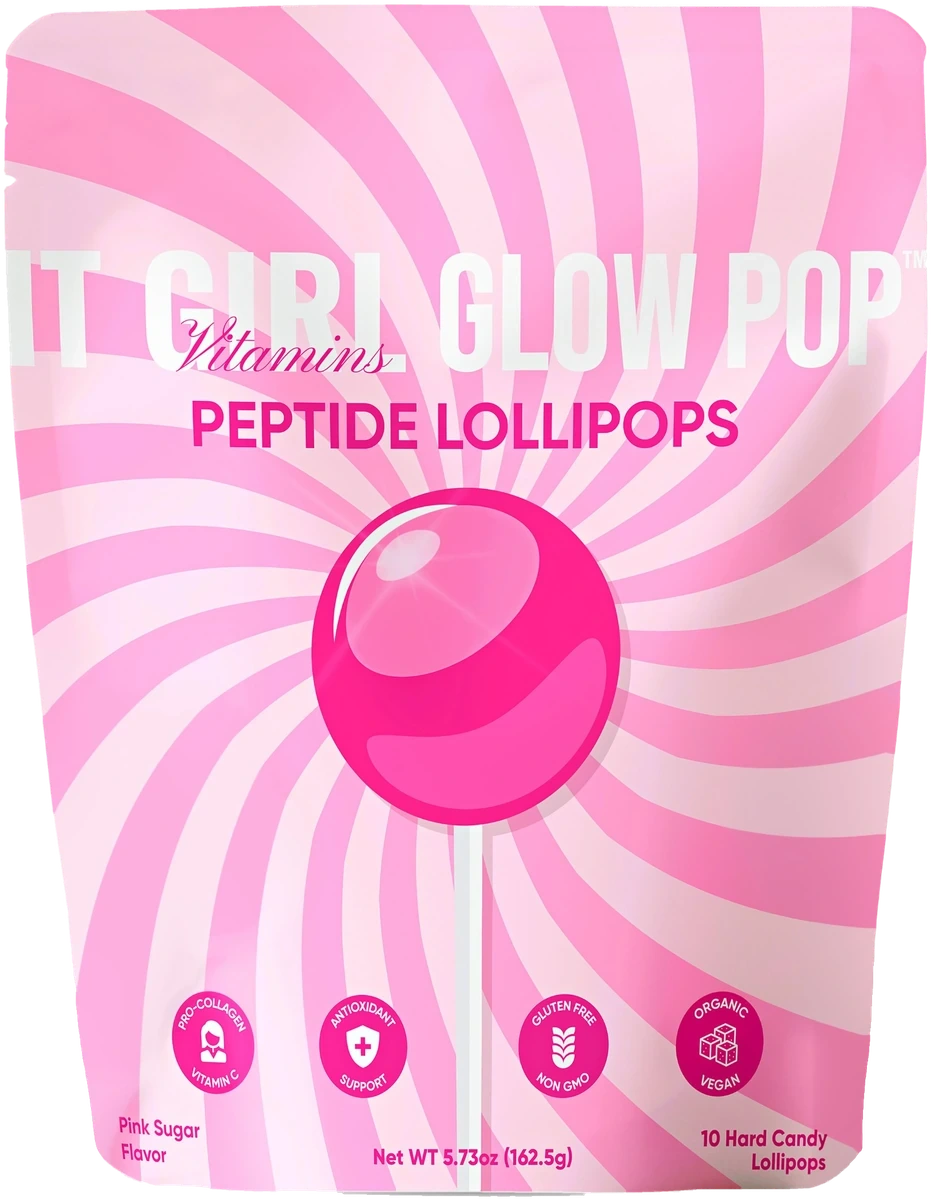
Vitamin C is the one ingredient here with a job description rather than a theory: the enzymes that modify proline and lysine during collagen assembly require it, and without it the body cannot build stable collagen at all. That is biochemistry, not marketing, and it is why the two are so often paired: a Peptide Beauty Pop carries 500 mg of vitamin C alongside 7,000 mg of collagen peptides.
Hyaluronic acid: the water-holding molecule
A large sugar molecule that sits in skin and connective tissue and binds a lot of water. Taken orally the story is less tidy than the ads imply: it is too big to travel intact, so it is broken down and reassembled, and research on what that accomplishes is still developing. Worth taking, worth not overselling. More in oral versus topical hyaluronic acid.
Ceramides: the mortar in the barrier
If skin cells are bricks, ceramides are the lipid mortar holding them in a sealed layer that keeps water in and irritants out. Plant-derived phytoceramides are the usual ingestible form, and they anchor barrier formulas like It Girl Skin. More in ceramides and glutathione for skin.
Antioxidants: defense, not construction
Sun, pollution and ordinary metabolism generate reactive molecules that damage cells, and antioxidants (astaxanthin, CoQ10, glutathione, the polyphenols in berries and matcha) are part of how the body manages that load. Two caveats: more is not automatically better, and a varied diet already does much of this.
Greens and probiotics: the unglamorous groundwork
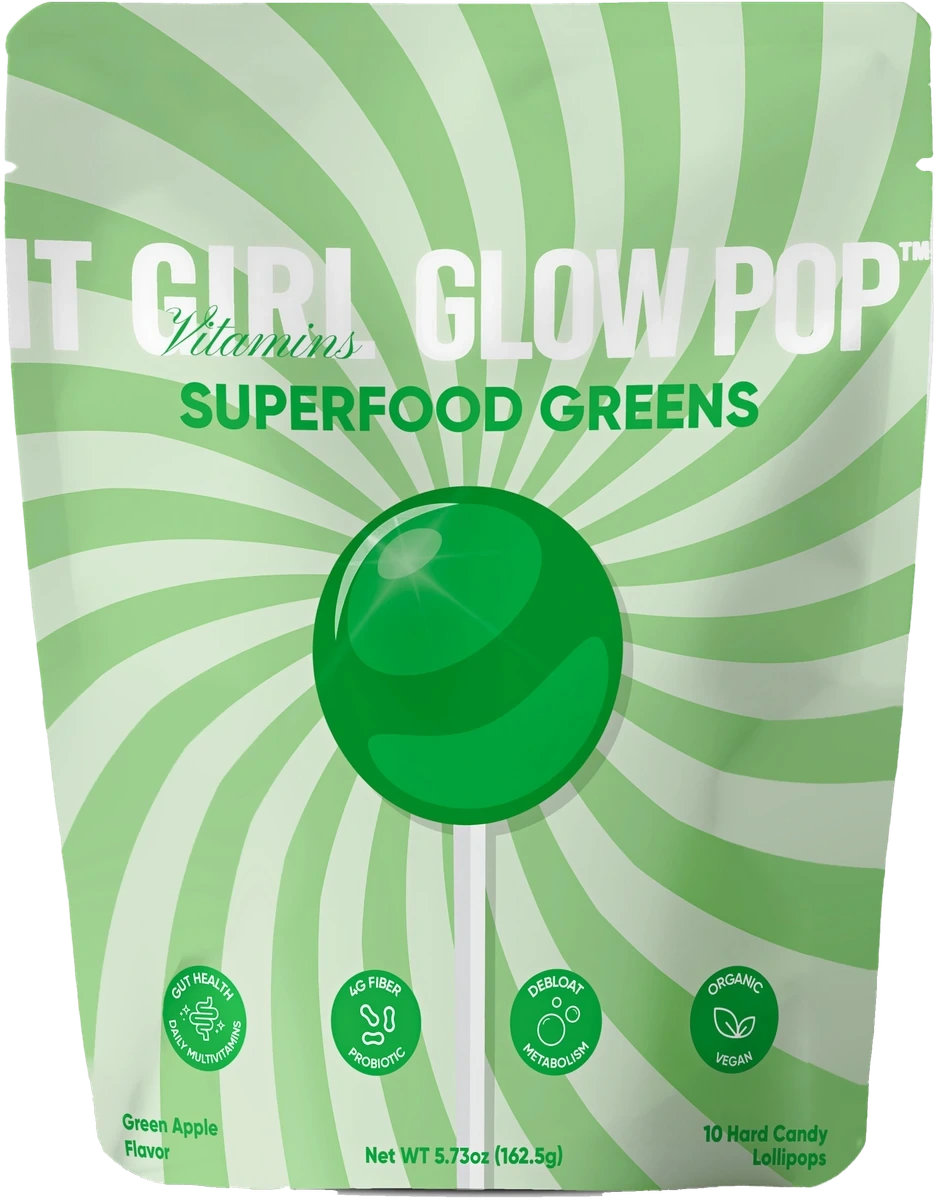
Leafy greens, algae, fiber and fermented foods make a terrible advertisement and feed the system that processes everything else. The gut-skin relationship is real enough to be a serious research field and too unsettled to promise anything about, which is what we lay out in the gut-skin connection.
Electrolytes: where the water actually goes
Drinking more water does not automatically hydrate you. Sodium, potassium and magnesium govern whether that water stays in your cells or leaves twenty minutes later, and skin sits low on the priority list when fluid is scarce. More in electrolytes, hydration and skin.
Do beauty supplements actually work? An honest answer
What ingestible beauty cannot do, stated plainly
- It is not sunscreen. Ultraviolet exposure is the biggest driver of visible skin change you have any control over. No capsule, gummy or lollipop substitutes for SPF.
- It is not skincare. A supplement cannot exfoliate or deliver a retinoid to the surface; the two are complementary, not interchangeable.
- It is not a substitute for sleep or food. On five hours of sleep and no protein, a supplement is being asked to fix a problem it did not create.
- It is not a treatment. Supplements are food, not medicine. If something on your skin is painful, spreading or refusing to settle, that is a doctor's territory.
If you are pregnant, nursing, taking medication or managing a health condition, check with your doctor before adding a supplement. That applies to the gentle-looking pink ones too.
A realistic timeline, month by month
Weeks 1 to 4. Expect nothing visible. Some people say their nails feel less bendy; that is anecdote.
Weeks 4 to 8. The earliest point at which a subtle change is biologically plausible. Subtle is the operative word.
Months 3 to 6. The honest judging window: compare a photo taken in the same light at the same time of day and decide whether it was worth it. Hydrating skin from the inside covers what shifts first and what takes longest.
Why the format you will actually finish beats the "best" formula
Here is the least glamorous sentence in this article: adherence beats potency. A powder with a magnificent panel that needs a blender bottle and a tolerance for pond flavors is worth less than a modest formula you take without thinking. The first gets used nine times; the second, ninety.
The trade-off is worth saying out loud. A scoop of powder holds more active ingredient than a lollipop or a handful of gummies. That is physics, and any brand claiming otherwise is fibbing. A Peptide Beauty Pop carries 7,000 mg of collagen peptides with 1 g of sugar; a daily pack of It Girl Snack carries 2,500 mg of marine collagen across seven gummies with 0.5 g of sugar. Neither wins a spec-sheet contest against a 20 g scoop. What they win is whether you finish the pouch. The full comparison is in gummies versus capsules versus powders.
A starting routine that fits in a normal life
- Food first. Protein at breakfast, plants at most meals, water throughout. Every supplement assumes this is roughly handled; if vegetables are purely theoretical for you, there are workarounds.
- Sunscreen, daily, no negotiation. The highest-return item here.
- Pick one anchor and make it automatic. One collagen-and-vitamin-C product attached to something you already do: a Peptide Beauty Pop a day, a daily pack of It Girl Snack, or two It Girl Skin gummies. One, not three.
- Add a second only if it solves a problem you have. Chronically under-hydrated? Electrolytes. No problem, no purchase.
- Give it ninety days, and be willing to conclude it did nothing for you. That is a legitimate result.
Questions people actually ask
Does beauty from within actually work, or is it just marketing?
Both are true at once. The principle that skin is built from nutrients you consume is not in dispute, and the reasoning behind collagen peptides and vitamin C is sound. What gets oversold is the speed and the size of the effect.
How long should I take a beauty supplement before deciding it is not working?
Give it three months of consistent daily use. Skin's structural layer rebuilds slowly and hair takes months to reach visible length, so anything shorter is not a fair test. Take a photo on day one so you are comparing evidence rather than memory.
Can I take collagen and use topical skincare at the same time?
Yes, and they are not competing. Topical products work on the surface and the layers just beneath it, while an ingestible supplies raw materials through your bloodstream. If you use prescription topicals, mention any new supplement to the doctor who prescribed them.
Can I just get all of this from food instead?
Largely, yes. A diet with adequate protein, plenty of vegetables and enough water covers most of what skin needs. Supplements are a top-up, not a replacement for that foundation. They are most useful when a specific piece of it is missing from your week.
If you want a version of this that fits in a pocket, our Peptide Beauty Pop was built for that kind of routine.
This article is for general information and is not medical advice. These statements have not been evaluated by the Food and Drug Administration. This product is not intended to diagnose, treat, cure or prevent any disease.