Hair, Skin and Nails Supplements: What's Actually Inside Them
Biotin, collagen, vitamin C, zinc, silica, MSM and lysine: what each one does, what it doesn't, and how to read a hair skin and nails label properly.
"Hair, skin and nails" is a marketing category, not a biological one. No ingredient acts on all three the same way, and almost every bottle carrying it is built from the same eight things: a B vitamin, a protein, a vitamin, a mineral, a plant extract, a sulfur compound, an amino acid and a water-binding sugar molecule. What follows is what each is, what it does, and the part that never reaches the front panel: what it is not.
- Collagen peptides, vitamin C, zinc and L-lysine are the four with a clear structural job. Biotin is the most inflated number in the category, and more is not better.
- Silica, MSM and hyaluronic acid are plausible and popular, with evidence thinner than the marketing. Uncertain is not useless, but it should be said out loud.
- Hair and nails are the slowest tissues you own: you only ever see growth that already happened.
Biotin: the biggest number, doing the least work
Biotin is vitamin B7, a water-soluble vitamin found in eggs, nuts, seeds and fish. It works as a coenzyme for enzymes that process fats, carbohydrates and amino acids. Keratin, the protein hair and nails are made from, is built out of amino acids, and that upstream relationship is the entire basis of biotin's reputation.
What it is not is a dose-dependent hair treatment. Biotin is water-soluble, so what the body cannot use it largely excretes. An adult is generally considered to need a double-digit number of micrograms a day; plenty of labels list thousands, and not because thousands work better. One practical note: high-dose biotin is known to interfere with certain laboratory blood tests, so mention it to your doctor before bloodwork.
The four ingredients with a clear structural job
Collagen peptides
Collagen is the structural protein making up most of the dermis by dry weight. Peptides are that protein hydrolyzed into short chains, which makes it dissolvable and digestible. Its role is to supply an unusual amino acid profile (heavy in glycine, proline and hydroxyproline) that the body draws on when building connective tissue. What it is not is a delivery service: you do not swallow collagen and have it arrive in your face as collagen. Longer version in our explainer on collagen types and peptides.
Vitamin C
Not a collagen ingredient, but the cofactor without which collagen cannot be assembled: the enzymes that modify proline and lysine during synthesis require it. The least glamorous and most defensible item on any beauty label. What it is not is endlessly dose-responsive. Beyond what you can use, it goes the way of all water-soluble vitamins.
Zinc
A trace mineral and a cofactor for a great many enzymes, including those behind protein synthesis and cell division: what a growing hair follicle does constantly. What it is not is harmless in unlimited amounts: sustained high-dose zinc competes with copper absorption.
L-lysine
An essential amino acid, meaning the body cannot make it. Lysine residues inside collagen get cross-linked, and those cross-links are much of what gives collagen fibers their strength. Collagen is also an incomplete protein, so pairing the two is a formulation decision rather than decoration.
The three where the marketing runs ahead of the science
Silica, usually from bamboo
Bamboo extract is one of the most concentrated plant sources of silicon, which appears on labels as silica. Silicon is a trace element present in connective tissue and thought to be involved in forming collagen, though research is ongoing. What it is not is a brick. Nothing you swallow is built directly into a nail.
MSM
Methylsulfonylmethane is an organic sulfur compound, and sulfur is the point. Cysteine carries sulfur, and disulfide bonds between cysteine residues are much of what makes keratin rigid: the chemistry a perm breaks and reforms. What MSM is not is exclusive: protein, eggs and alliums supply sulfur too.
Hyaluronic acid
Not a protein but a glycosaminoglycan: a long sugar chain in skin and connective tissue whose defining property is holding a great deal of water relative to its size. What it is not is the serum on your shelf. Topical hyaluronic acid draws water to the surface; the oral version is broken down by gut bacteria, absorbed as fragments and distributed by the body. A different route, and one where research is still developing, compared here.
Marine vs bovine vs vegan collagen: what the difference really is
Why hair and nails are the slowest things you own
This explains most disappointed reviews. Hair and nails are dead keratin: nothing you take changes a strand that already exists, only what is being made at the root right now.
Hair grows roughly a centimeter a month, so a season of daily supplementing shows up as a few centimeters near the scalp, hidden among everything older. A fingernail takes something in the order of half a year to grow out; a toenail longer. Skin is fastest, turning its outer layer over in roughly a month, which is why skin feel is almost always reported first and nails last.
Nails are the most honest signal you have: they grow at a steady rate, so a change beginning at the cuticle shows as a line moving up. They are also the slowest, which is why judging any of this at three weeks tells you nothing: our realistic timeline goes week by week.
What a sensible label looks like
- Amounts per serving for everything that matters, not per container, not buried in a blend.
- An honest serving size. If a real collagen dose needs seven gummies, the label should say seven gummies.
- Source and type named for the collagen (marine Type I and a bovine blend are not interchangeable) and sugar stated.
- Restraint where it belongs. A modest biotin figure is a better sign than a spectacular one.
Reading a real label: It Girl Snack, line by line
Ours as a worked example. It Girl Snack is seven heart-shaped gummies per daily pack carrying 2,500 mg marine collagen as Type I peptides, 1,000 mg MSM, 250 mg L-lysine and 250 mg hyaluronic acid, plus ceramides, bamboo silica and biotin, at 0.5 g sugar for the pack.
The serving is seven gummies and says so, because 2,500 mg of collagen plus a gram of MSM does not fit into one gummy. The collagen has a source and a type attached. The four ingredients carrying numbers are the four with the clearest rationale, and biotin, which most brands headline, sits in the list without one.
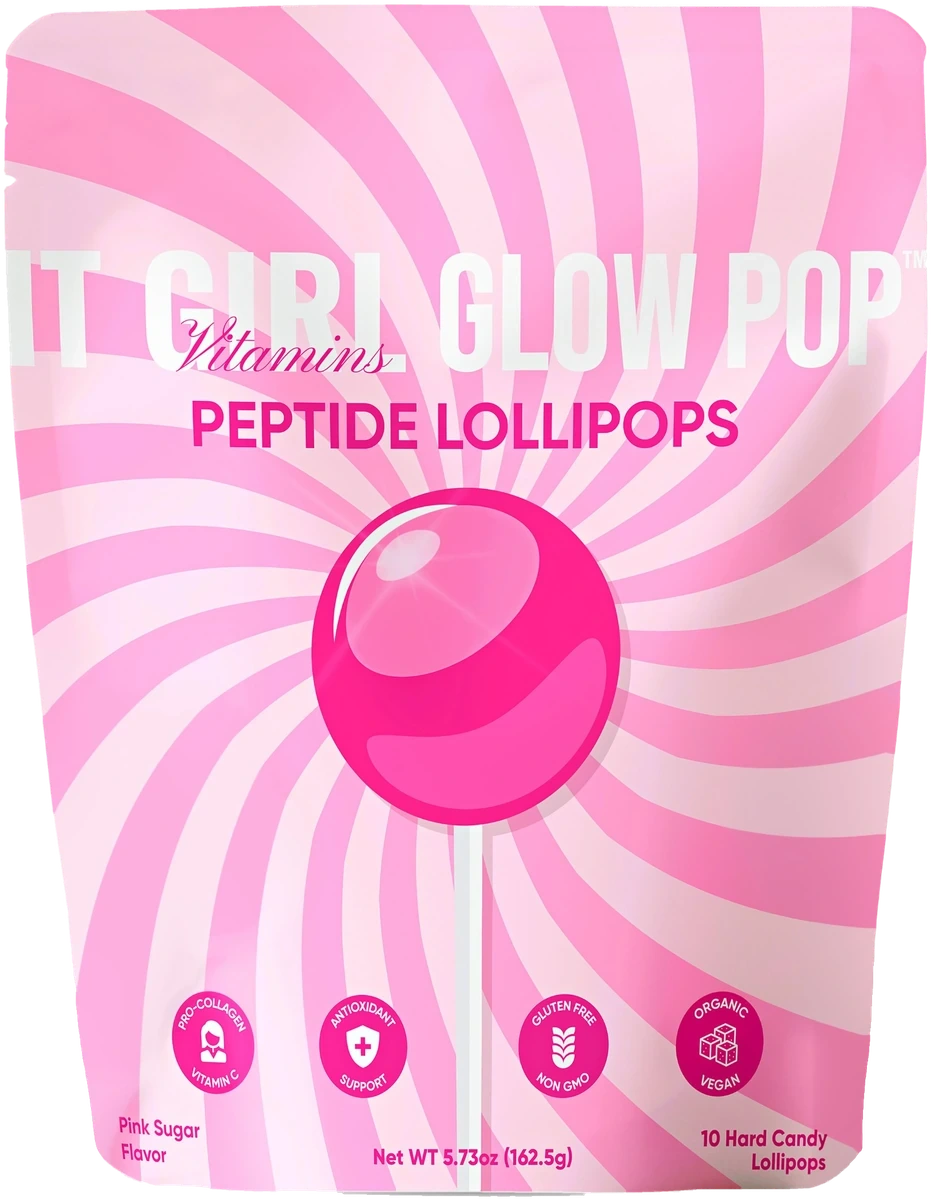
The honest caveat: 2,500 mg is a moderate dose, not a powder-sized scoop. Formats trade off. Our Peptide Beauty Pop carries 7,000 mg of collagen peptides with 500 mg of vitamin C in one lollipop, while It Girl Skin takes the multi-collagen route in two gummies a day. Whether any of it is worth doing is a fair question, taken up in our look at whether beauty supplements work.
The questions to ask before you buy
- How much of the headline ingredient is in one serving, and how many pieces is that?
- Is the collagen source and type named, or is it just "collagen"?
- Is vitamin C in the formula, or am I getting it elsewhere?
- Does anything here duplicate my multivitamin, particularly zinc and biotin?
- Would I still be taking this on day sixty?
That last one decides more outcomes than the ingredient list does. Most of the benefit is showing up daily for long enough for slow tissue to turn over.
Questions people actually ask
Do hair, skin and nails vitamins actually work?
It depends on the ingredient and on your starting point. Vitamin C, zinc and lysine have well-described roles in building connective tissue, and topping up a nutrient you are genuinely short of is the case most likely to show a difference. For someone already eating well, the effect is less predictable.
How much biotin do I actually need in a day?
An adult is generally considered to need a small, double-digit number of micrograms, usually covered by an ordinary mixed diet. Labels frequently list thousands. Biotin is water-soluble, so the excess is largely excreted rather than stored for later.
Can I take a hair, skin and nails supplement with my multivitamin?
Check for overlap first, especially zinc and biotin, since both are in most multivitamins already and stacking adds up fast. If you are pregnant, nursing, taking medication or managing a health condition, check with your doctor before adding a supplement.
Why do my nails take longer to change than my skin?
A nail is dead keratin, and nothing you swallow alters a part of it that has already formed. Any change begins under the cuticle and has to grow out, roughly half a year for a fingernail. Skin turns over its outer layer in about a month, so people notice skin feel first.
Does the format matter, gummy, capsule or powder?
Mainly for dose and adherence. Powders hold more collagen than a gummy can, while gummies and lollipops tend to be the formats people actually remember. Slow tissues need consistency more than a big dose, so the format you will use daily is usually the right answer.
If you would rather read a label than a claim, ours are published in full.
This article is for general information and is not medical advice. These statements have not been evaluated by the Food and Drug Administration. This product is not intended to diagnose, treat, cure or prevent any disease.