How to Read a Supplement Facts Label: A 7-Step Guide
The front of the pack is marketing. The panel on the back is the product. Here is how to read it in about a minute, step by step.
The front of a supplement is where the brand talks. The panel on the back is where the product talks, and it is far more useful, once you know the order to read it in.
This is the order we use. Seven steps, about sixty seconds, and it works on any pack: gummies, capsules, powders, or a lollipop that happens to have a label.
- Start with the serving size. Every number below it belongs to that serving, not to the whole pack.
- % Daily Value is a yardstick, not a goal. A dagger (†) means no Daily Value exists for that ingredient.
- A blend lists a total weight, not each ingredient's amount. If one ingredient matters to you, look for its own number.
- Read the small print under the panel: other ingredients, allergens, warnings and the best-by date.
First: which panel are you holding?
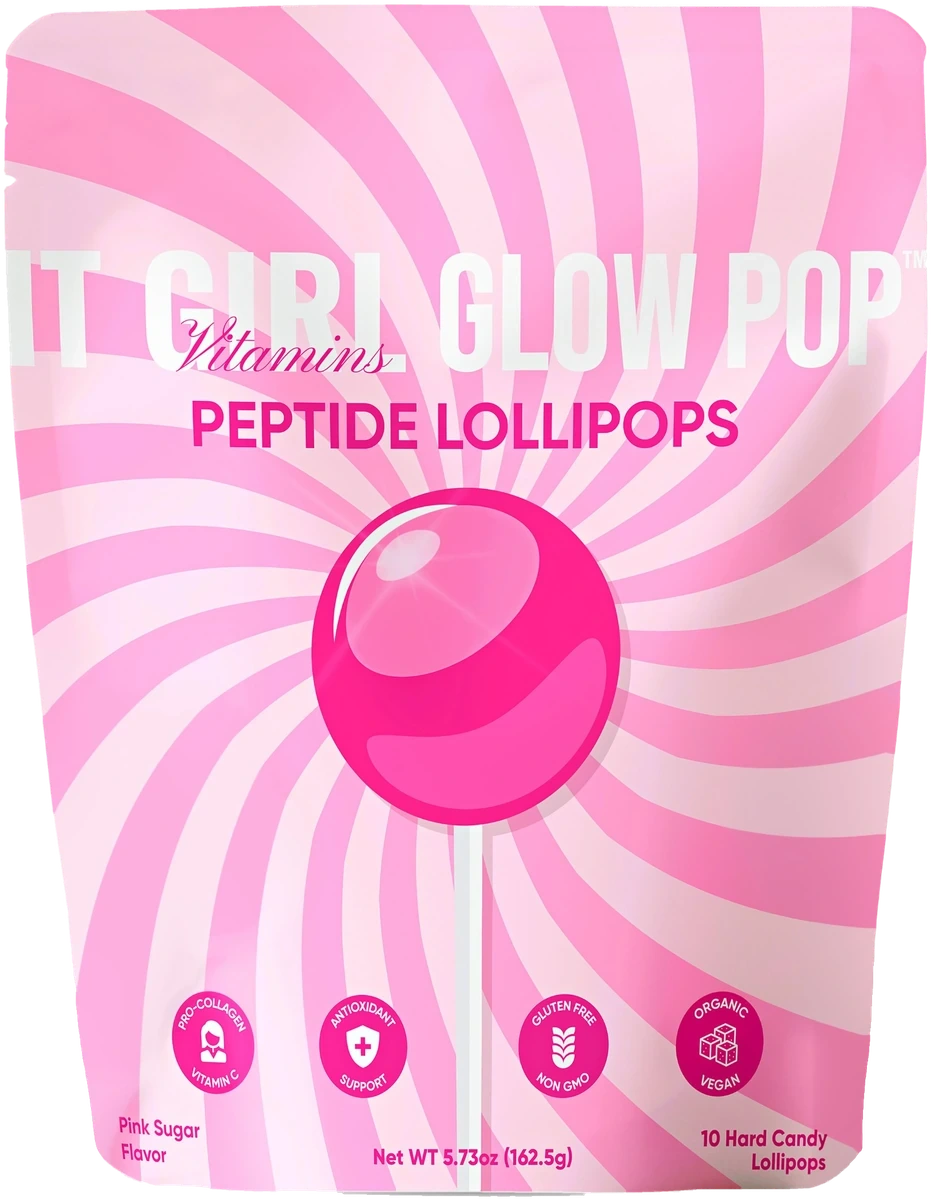
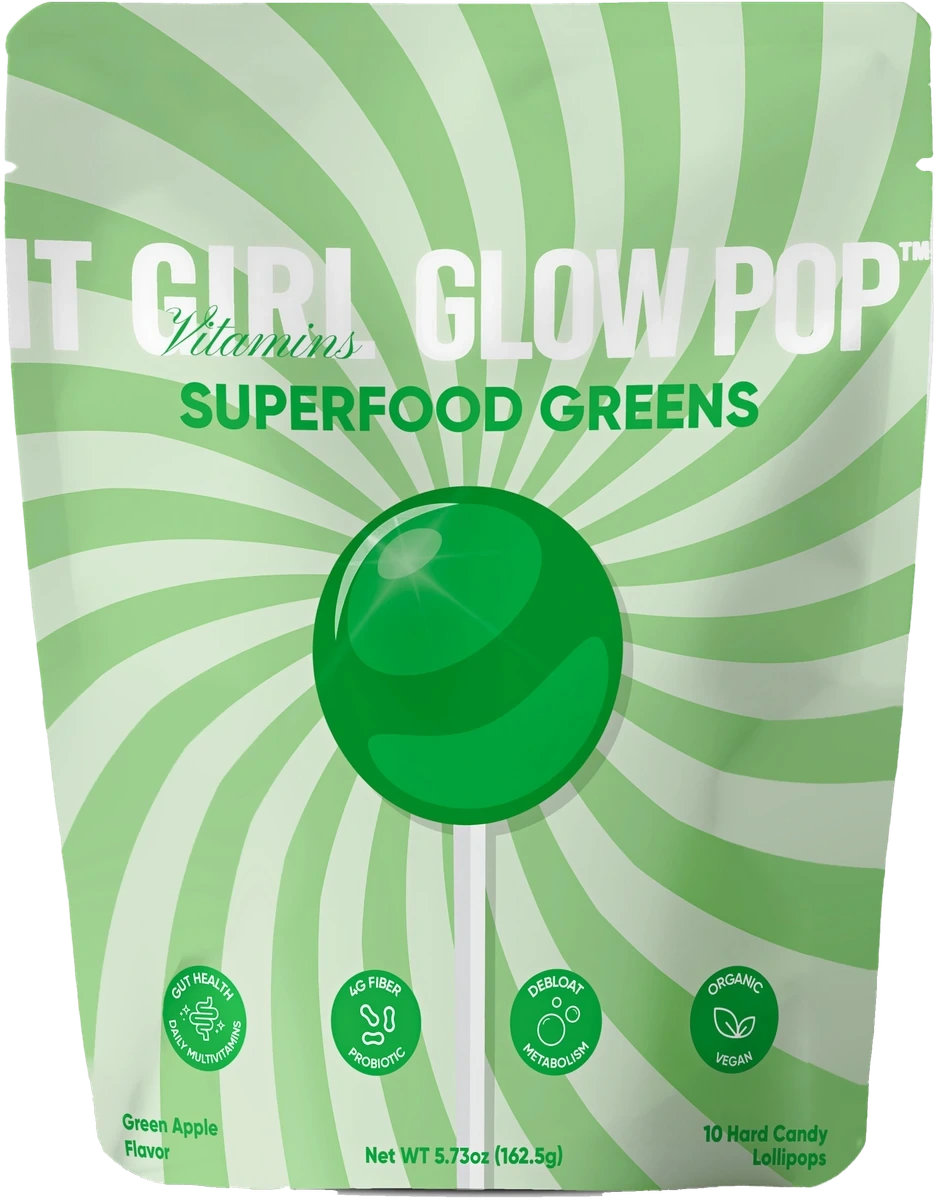
Dietary supplements carry a Supplement Facts panel. Foods carry Nutrition Facts. Functional candy can sit on either side of that line, which is why two products from the same brand can look different on the back. Ours are a good example: the Peptide and Greens pops carry Nutrition Facts, while the Electrolyte Hydration Pop, It Girl Snack and It Girl Skin carry Supplement Facts.
The good news is that the reading order is the same for both. Serving first, amounts second, context third.

Step 1: Start with the serving size
The serving size is the amount the label tells you to take at one time: one lollipop, seven gummies, two gummies, one scoop. The FDA defines it as the maximum amount recommended per eating occasion, and every figure in the panel is calculated for exactly that amount.
This is where most comparisons go wrong. A pack that looks generous may need three or four gummies to reach its numbers, while another delivers them in one. Before you compare two products, make sure you are comparing one serving against one serving, and that it is an amount you would actually take every day.
Step 2: Read each amount in its own unit
Nutrients are listed in grams (g), milligrams (mg) or micrograms (mcg), and the units are easy to misread at a glance. One gram is 1,000 mg; one milligram is 1,000 mcg. So 1,000 mcg of biotin and 1 mg of biotin are the same amount, just written differently.
Vitamin A is usually shown as mcg RAE (retinol activity equivalents), because different forms of vitamin A count differently toward what your body can use. If a label still shows IU, it is using an older unit, and the two cannot be compared line for line.
Step 3: Use % Daily Value as a yardstick
The % Daily Value (% DV) tells you how much of a reference daily amount one serving provides. It is a quick way to see whether an amount is small or substantial, not a score to maximise.
| What you see | What it means |
|---|---|
| 5% DV or less | A small amount of that nutrient per serving. |
| 20% DV or more | A substantial amount per serving. |
| Over 100% DV | Common for water-soluble vitamins such as vitamin C and biotin. Not automatically a problem, but it is the cue to check your total from every product you take. |
| † or "Daily Value not established" | The ingredient has no official Daily Value; collagen, hyaluronic acid and probiotics are typical examples. The amount is still listed; there is simply no percentage to compare it to. |
The number that matters more than a percentage is the upper limit. Vitamin C, for example, has a tolerable upper intake level of 2,000 mg a day for adults, counted from food and supplements together. If you take several products, add them up.
Step 4: Notice the form in brackets
Many lines name a compound in brackets: zinc (as zinc citrate), vitamin B12 (as cyanocobalamin), vitamin C (as ascorbic acid). That tells you the specific form used. Different forms deliver different amounts of the nutrient itself and can feel different on the stomach, so the bracket is useful when you compare two otherwise similar labels. You do not need a chemistry degree. Just notice whether the form is named at all.
Step 5: Spot the blends
A blend groups several ingredients under one name and one total weight, with the ingredients listed underneath in descending order by weight. What a blend does not show is how much of each ingredient is inside.
Our own It Girl Snack panel has a clear example: an Adaptogen Beauty Stress Blend at 600 mg, with ashwagandha, rhodiola and schisandra listed beneath it. Blends are legal and very common; they simply make like-for-like comparison harder. If a single ingredient is the reason you are buying, look for it as its own line with its own amount. For more on how blends show up on greens labels, see what's actually in a greens supplement.
Do beauty supplements actually work? An honest answer
Step 6: For probiotics, look for strains and CFU
Probiotics are listed by genus, species and ideally strain, for instance Lactobacillus rhamnosus GG rather than just "lactobacillus". Research on probiotics is strain-specific, so a named strain tells you far more than a category.
The amount is given in colony-forming units (CFU). The NIH Office of Dietary Supplements points out that a higher CFU count is not automatically more effective, and suggests looking for the count guaranteed through the end of shelf life rather than at manufacture. Our Superfood Greens Pop, for reference, lists Bacillus coagulans at 1 billion CFU. The fuller picture is in our probiotics, prebiotics and postbiotics guide.
Step 7: Read the small print under the panel
The part most people skip is where the useful details live:
- Other ingredients. Sweeteners, gelling agents, colours and flavours. This is where you will find whether a gummy is set with pectin or gelatin (here is why that matters), or whether a low-sugar product uses sugar alcohols such as erythritol, which some people find hard on digestion.
- The allergen statement. Major food allergens have to be declared. Fish-sourced collagen, for example, should say so.
- Warnings. Anything from "choking hazard" on a lollipop to "check with your doctor if you are pregnant or taking medication".
- The disclaimer. A benefit statement on a supplement is followed by the line that it has not been evaluated by the FDA. That is standard, and it is a reminder that the claim describes support, not treatment.
- Best-by date and lot number. Useful for freshness, and essential if you ever need to contact a brand about a specific batch.
The FDA does not approve dietary supplements for safety and effectiveness before they go on sale. That makes the label your best tool, and independent seals such as USP or NSF a useful extra, because they mean an outside organisation has checked the product against its label.
The 60-second label check
- What is one serving, and will I really take that much every day?
- Are the amounts I care about listed individually, in clear units?
- Anything well over 100% DV, and what is my total across products?
- Any blends hiding the ingredient I am buying it for?
- For probiotics: named strains, and CFU through shelf life?
- What is in "other ingredients", and does anything disagree with me?
- Allergens, warnings and best-by date: all present?
Once reading labels becomes a habit, timing is the natural next question. Our morning-to-night guide covers when to take what, and our collagen comparison puts this checklist to work on three collagen labels.
Our labels, published in full
Every It Girl product page opens its full panel. No screenshots cropped to the flattering half. Start with the Peptide Beauty Pop: one lollipop, 7,000 mg of collagen peptides, 500 mg of vitamin C and 500 mg of hyaluronic acid, with the ingredients written out underneath. Or browse the whole range and read them side by side.
Questions people actually ask
What does the dagger symbol (†) mean on a supplement label?
It means no Daily Value has been established for that ingredient, so there is no percentage to show. Collagen, hyaluronic acid, probiotics and most botanical extracts are common examples. The amount per serving is still listed next to the ingredient.
Is more than 100% Daily Value safe?
Often, yes. Water-soluble vitamins such as vitamin C and biotin are frequently sold above 100% DV. The number to watch is the tolerable upper intake level, which counts food and supplements together. If you take several products, add up the totals, and ask your doctor or pharmacist if you are unsure.
Why do some products say Nutrition Facts instead of Supplement Facts?
Foods use a Nutrition Facts panel and dietary supplements use a Supplement Facts panel. Candy-format products can fall into either category depending on how they are made and sold. Both panels show the serving size and the amount of each listed nutrient per serving.
Are proprietary blends bad?
Not necessarily. A blend must list its total weight and its ingredients in order of weight, but not each ingredient's amount. That protects a formula and makes comparisons harder. If one ingredient is the reason you are buying, look for it listed on its own line with its own amount.
How do I know if a probiotic is still alive?
Look for a CFU count guaranteed through the end of shelf life or by the best-by date, and follow the storage instructions. The NIH Office of Dietary Supplements notes that a higher CFU count is not automatically more effective than a lower one.
This article is for general information and is not medical advice. These statements have not been evaluated by the Food and Drug Administration. This product is not intended to diagnose, treat, cure or prevent any disease. If you are pregnant, nursing, taking medication or managing a health condition, check with your doctor before adding a supplement.